Bringing professional film equipment into Nepal is one of the most underestimated parts of a foreign shoot. Cameras, lenses, lighting, grip, audio, drones, batteries and data storage all have to be described accurately, valued honestly and accounted for on the way in and the way out. Film Permits Nepal is an independent, privately owned production-support service based in Kathmandu. We are not a government office, we do not issue permits, and we do not clear goods through customs ourselves. What we do is help foreign productions prepare a clean, well-organised equipment and customs information package so that the people who do handle clearance, whether that is a licensed customs broker, a freight agent or the officials at the point of entry, receive exactly what they need in a form they can work with.
This page explains, in practical terms, how a production should think about its gear list, what records typically travel with professional equipment, and how equipment planning connects to the wider film permit workflow. It also sets out where specialist customs help becomes essential and where our role ends. We deliberately avoid quoting specific duty rates, deposit amounts, bond values or clearance times, because those depend on current regulations, the exact nature of your kit and decisions made by the relevant authorities on the day. Instead, we focus on the parts you can control: accuracy, consistency, completeness and timing. A production that arrives with a precise, matching set of documents gives itself the best possible chance of a smooth entry. A production that improvises at the airport creates risk for its schedule, its budget and its equipment. Our aim is to move you firmly into the first category well before anyone boards a flight.
What our equipment and customs support covers
Our involvement in the equipment and customs side of a production is focused, document oriented and clearly bounded. We help you build an accurate equipment inventory, we cross-check that inventory against the rest of your permit paperwork, and we help you assemble the ownership, value and re-export information that a customs broker or freight agent will ask for. We also flag the items on your list that commonly attract extra attention, such as drones, wireless transmitters, large lithium battery stocks and high-value optics, so that nothing takes you by surprise on arrival.
What we do not do is equally important to state plainly. We do not clear equipment through Nepali customs, we do not act as your customs broker, we do not lodge import declarations, and we do not physically receive, store or transport your gear. We do not pay duties, deposits or bonds on your behalf, and we never advise you to under-declare values or mislabel items. Those are lines we do not cross, both because they fall outside our role and because they would expose your production to real risk.
Think of us as the party that gets your information house in order before it reaches the specialists. Freight agents and brokers work far more efficiently from a clean, consistent, well-formatted equipment package than from a scattered collection of rental invoices and half-finished spreadsheets. By the time your materials reach them, we want every item to be described the same way across every document, every value to be sourced and consistent, and every ownership question already answered. This reduces back-and-forth, shortens the preparation window and lowers the chance of a mismatch that stalls clearance.
We also keep the equipment picture connected to your permit picture. A gear list is not an isolated document. It interacts with the activities described in your permit materials, with any drone plans, and sometimes with location-specific considerations. Because we prepare both sides, we can spot inconsistencies early, for example a drone that appears on the equipment list but nowhere in the filming plan, or a lighting package that implies generator use in a location where that raises separate questions. Catching those gaps during preparation is far cheaper than discovering them at the border or on set.
Building an accurate equipment inventory
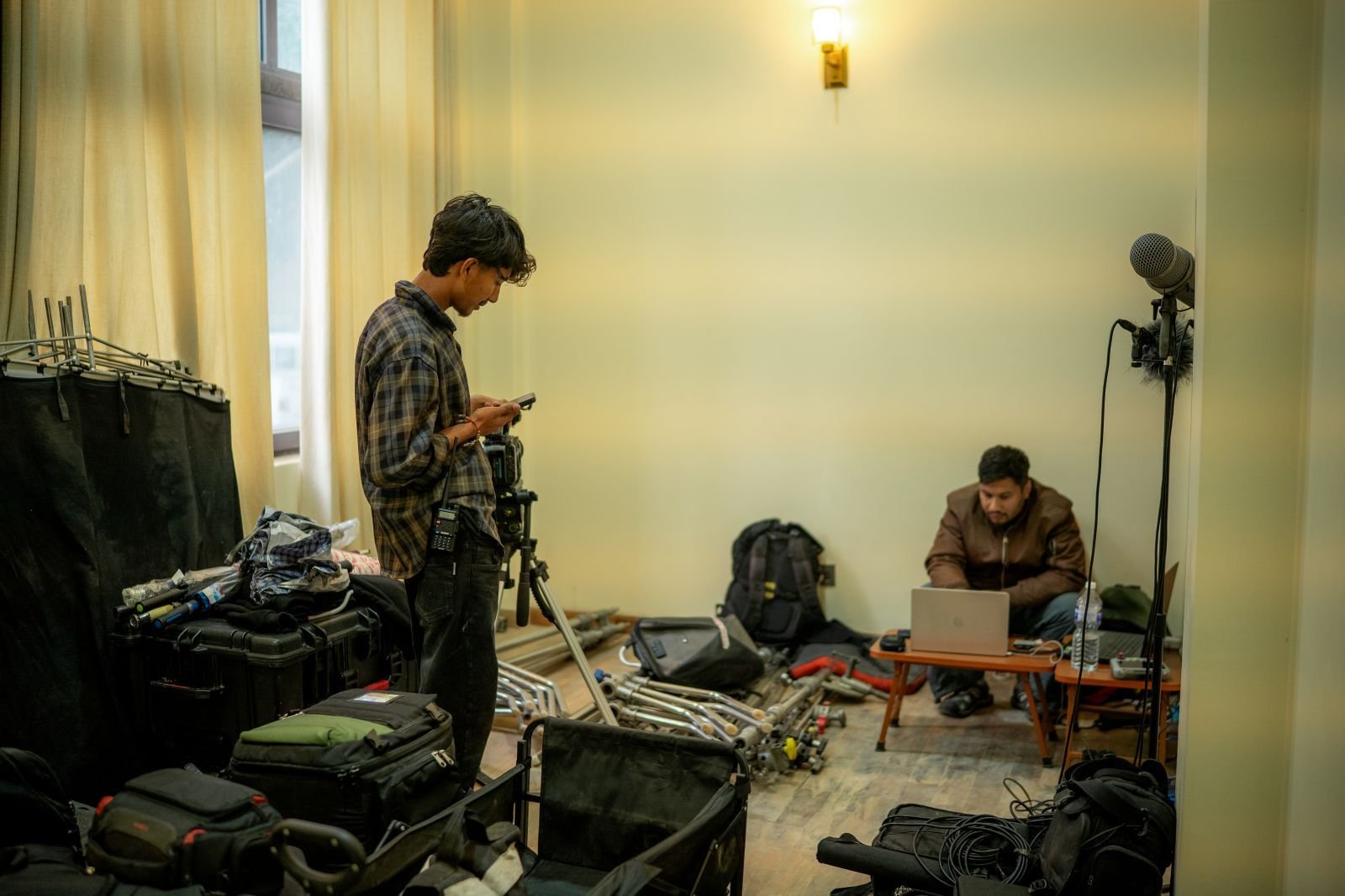
The foundation of everything on this page is a single, authoritative equipment inventory. This is the master list of every item you intend to bring into Nepal, described precisely enough that a stranger could match each line to a physical object in a case. Most productions start with a rough kit list from the rental house or the DIT, and most of those lists are not detailed enough for customs purposes. Our first job is to help you turn a working kit list into a customs-ready inventory.
A customs-ready line item generally needs more than a nickname. Instead of "A-cam" you need the make, model, a clear description of what the item is, the quantity, the serial number where one exists, and a declared value with its currency. Consumables and accessories that travel in bulk, such as cables, clamps, gels or gaffer tape, are usually grouped sensibly rather than listed individually, but the grouping should still be honest and quantified. The guiding principle is that the list should let someone reconcile what is written on paper against what is physically present, in either direction, without guesswork.
Consistency matters as much as detail. The same camera body should be described with the same wording and the same serial number everywhere it appears, whether that is on the master inventory, a rental agreement, a freight manifest or an insurance schedule. Small discrepancies, a transposed serial digit, a model number that differs by one character, a value that appears in two currencies, are exactly the kind of thing that slows a careful review. We read across your documents specifically to hunt down these mismatches before anyone else has to.
We also encourage productions to think about their inventory in logical groups: camera, lenses, grip, lighting, power and batteries, audio, wireless and radio equipment, data and storage, drones and aerial, and general consumables. Grouping this way makes the list easier to review, easier to pack against, and easier to reconcile on re-export. It also makes it obvious which categories carry extra sensitivity, so those can be prepared with additional care.
Finally, treat the inventory as a living document until the moment of travel. Productions add and drop gear during prep. Every change should flow back into the master list so that the version everyone works from is the version that actually flies. A frozen, out-of-date inventory is almost as risky as no inventory at all, because it creates a false sense of completeness while the physical kit has quietly moved on.

Ownership and rental records
Professional film equipment rarely all belongs to one party. A typical production travels with a mixture of owned gear, items rented from one or more rental houses, pieces borrowed from a crew member or a sponsor, and sometimes equipment sub-hired at short notice. For customs and re-export purposes, who owns each item and under what arrangement can matter, because temporary import concepts generally rest on the idea that the same goods leave again in the same condition. Clear ownership records support that story.
For owned equipment, the useful records are usually proof that the production or its company owns the item, along with the item description, serial number and value that appear on your inventory. For rented equipment, the rental agreement or hire contract is the key document, ideally listing the same descriptions, serials and values as your master list. Where gear is borrowed, a short letter or note from the owner authorising the production to carry and use the item helps establish the arrangement. The exact documents that satisfy the relevant authorities depend on current requirements and on advice from your customs broker, which is confirmed during preparation rather than assumed here.
Rental records deserve particular attention because they are prepared by third parties on their own timelines. Rental houses often issue paperwork close to collection, and that paperwork is written for their commercial purposes, not for a customs file. It is common to find that a rental invoice groups items differently from your inventory, omits serial numbers, or values a package as a bundle rather than line by line. We help you reconcile these documents so that the rental paperwork and your master inventory tell the same story, or so that any legitimate differences are explained rather than left as unexplained gaps.
Mixed-ownership kits also create practical re-export questions. If a lens is swapped mid-shoot because the original failed, the item that leaves is not the item that entered, and that needs to be traceable. If a rental house asks for gear to be returned early, or if a purchase is made locally, the picture changes again. We encourage productions to designate one person, often a production manager or a dedicated equipment coordinator, as the owner of the inventory, responsible for logging every substitution, addition or removal. That single point of truth is what allows ownership records to stay coherent from arrival through to departure.
None of this requires you to have perfect paperwork before you contact us. Part of our review is precisely to tell you which ownership records are strong, which are thin, and which are missing, so you have time to chase the right documents from the right parties while it is still easy to do so.
Declared values and currency
Every professional customs process cares about value, because value underpins duty assessments, deposit or bond calculations and the reconciliation of goods on re-export. For a film production, getting values right is not about minimising a number. It is about declaring honest, defensible, consistent figures that match your supporting documents. Under-declaration to reduce a deposit is a false economy that can jeopardise the whole shipment, and it is something we will never help a production do.
The practical challenge is that a single item can have several plausible values. A camera body has a new purchase price, a current market value, a rental replacement value and a depreciated book value, and these can differ substantially. What matters is that you choose a sensible, explainable basis for value, apply it consistently across your inventory, and back it with documents where you can. Rental replacement values, manufacturer pricing and recent purchase records are all common reference points. The basis that the relevant authority expects is confirmed with your customs broker during preparation, because it can depend on the import mechanism being used.
Currency is a recurring source of confusion. Productions assemble kit priced in different currencies: a camera invoiced in one currency, lenses in another, and local purchases in Nepali rupees. If your inventory mixes currencies without labelling them, or if the same item appears in two currencies on two documents, reviewers cannot reconcile the numbers quickly. We recommend stating a clear currency for every value, choosing a primary currency for the master inventory, and keeping any conversions transparent rather than baked in. We do not, however, invent exchange rates or assert a conversion as official; the rate and method that apply are matters for your broker and the authorities.
Consistency across the document set is the theme once again. The value of an item on your master inventory should match, or be clearly reconcilable with, the value on the rental agreement, the freight manifest and the insurance schedule. When a high-value item carries three different figures across three documents, that is a red flag to any careful reviewer, even when the differences are innocent. Our review flags these divergences so you can align them or document the reason for the difference before submission.
Finally, remember that total declared value drives the scale of whatever financial arrangement customs may require for temporary import. A production that understands roughly where its value sits can plan cash flow and speak to its broker realistically. We help you present that value picture clearly; we do not predict the specific deposit, bond or duty outcome, because that is determined by current rules and by the authorities handling your entry.

Batteries, power and lithium considerations
Batteries deserve their own planning conversation because they sit at the intersection of two different rule sets: airline dangerous-goods rules that govern how you fly them, and customs treatment that governs how they enter the country. A modern film package can carry a very large lithium battery stock across camera batteries, drone batteries, monitor and wireless power, and portable power stations, and that stock needs to be understood before travel rather than discovered at check-in.
On the airline side, lithium batteries are subject to carrier and international air transport rules that limit quantities, cap watt-hour ratings for cabin carriage, and often prohibit certain batteries in checked baggage or in cargo entirely. These rules are set by the airlines and aviation authorities, not by us, and they change, so they must be confirmed directly with your carrier and freight agent for your specific batteries and routing. What we can do is make sure your inventory captures the information those parties will ask for, typically the battery type, quantity, and watt-hour or capacity rating, so that the dangerous-goods conversation starts from real numbers rather than estimates.
On the customs side, batteries are goods like any other and belong on your equipment inventory with descriptions, quantities and values. Large quantities of high-capacity batteries and portable power stations can attract additional questions, so it helps to have them clearly listed and grouped rather than buried among accessories. Productions sometimes assume batteries are trivial because they are consumable in feel, but a case of drone batteries or a rack of V-mounts represents both value and a category that specialists watch closely.
Planning quantity is where many productions get caught. It is tempting to bring a very large battery stock to avoid running short on remote locations, but every extra battery adds to both the aviation compliance burden and the customs picture. We encourage productions to right-size their battery load: enough to shoot reliably given local charging realities, without a surplus that complicates travel and entry. Where local charging will be limited, that is a scheduling and logistics question worth solving deliberately rather than by simply packing more cells.
The safest posture is to treat batteries as a named workstream in your prep, not an afterthought. Decide the stock early, capture the ratings, confirm the flying rules with your carrier, and list everything on the inventory the same way you would a lens or a light. When batteries are planned with this level of care, they stop being a source of last-minute panic at the airport and become just another well-documented part of the kit.
Radio, wireless and communications equipment
Wireless and radio-frequency equipment is a category that foreign productions frequently overlook until it causes a problem. Wireless microphones, camera video transmitters, wireless follow-focus and lens control systems, radio talkback, and the control links used by drones all emit on radio frequencies, and radio-frequency use is regulated separately from the general act of filming. The frequencies and power levels that are freely usable in your home country are not automatically usable in Nepal, and that distinction can matter both for customs and for lawful operation.
On your equipment inventory, wireless and radio gear should be listed with the same care as any other item, including make, model, quantity, serial and value. It is worth grouping this equipment together so that its presence and scale are obvious to anyone reviewing the list. A production carrying multiple wireless video links, a large radio-mic package and drone control systems is presenting a meaningful RF footprint, and clarity about that footprint is better than having it emerge piecemeal.
Beyond the customs listing, there can be separate considerations about which frequencies may be operated and whether any authorisation applies to their use. Whether and how such considerations apply to your specific equipment depends on current regulations, the exact devices and frequencies involved, and factors that are confirmed against official sources and, where relevant, with the appropriate specialists during your review. We do not assert a particular authority, licence or frequency allocation as settled fact on this page, because those details must be checked rather than assumed, and getting them wrong would be worse than useless to you.
What we can do confidently is help you surface the wireless dimension early. Many productions do not even realise how much of their kit is RF-dependent until they see it listed together. Once it is visible, you can make informed choices: confirming device specifications, checking carrier and destination considerations for the specific frequencies, and deciding whether any device is worth the added complexity for the value it brings to the shoot.
The practical advice is to treat communications and wireless equipment as a deliberate category rather than a scatter of accessories. Capture the technical details while you still have the gear in front of you, keep the list consistent with your rental and freight paperwork, and raise any questions about frequency use during preparation rather than after arrival. Early visibility turns a potential surprise into a manageable, well-documented part of the plan.

Temporary import and re-export records
The central idea behind bringing a production kit into a country for a shoot is that the equipment is temporary. It comes in to be used and then leaves again, ideally in the same condition and quantity in which it arrived. Customs systems generally treat this differently from a permanent import of goods for sale, and the arrangement usually depends on being able to demonstrate, on the way out, that what left matches what came in. Your inventory is the backbone of that demonstration.
This is why the master equipment list is not just an entry document but an exit document. When the shoot ends and the kit is packed for departure, the re-export process typically involves reconciling the departing goods against the record made on arrival. If every item that entered also leaves, and the descriptions and serials match, that reconciliation is straightforward. If items are missing, added, substituted or unaccounted for, questions follow, and those questions can affect any deposit, bond or guarantee associated with the temporary import.
Because of this, the discipline that matters most is change control across the life of the shoot. Equipment gets damaged and replaced. Rental houses swap failed units. A production buys a piece of gear locally, or leaves a broken item behind, or ships an additional case out mid-schedule. Every one of these events changes the relationship between what entered and what will leave, and every one needs to be logged against the master inventory. A production that keeps this log honestly and continuously arrives at departure with a coherent story; a production that does not spends its final days reconstructing what happened.
The specific mechanism used to achieve temporary import, whether that involves a customs deposit, a bond, a guarantee, a carnet or another instrument, is a matter for your customs broker and the relevant authorities, and it depends on current rules and the nature of your kit. We do not assert which mechanism applies to your production, and we do not quote the values involved. What we do is make sure the underlying information, the thing that every one of those mechanisms relies on, is accurate, consistent and complete from the outset.
Our review therefore looks forward to departure even while you are preparing for arrival. We encourage you to nominate a person responsible for the re-export reconciliation, to keep the change log with the master inventory rather than in someone's memory, and to treat the exit as a planned event rather than a scramble. Equipment that entered cleanly and was tracked carefully tends to leave cleanly. That is the outcome the whole process is designed around.

How equipment planning connects to the film permit
Equipment and customs work does not sit in isolation from the rest of your permit preparation. The gear you bring is a direct reflection of the activities you plan to carry out, and reviewers on the permit side and the customs side are both, in effect, looking at the same production from different angles. When those two views agree, your paperwork reinforces itself. When they diverge, each inconsistency becomes a question someone has to resolve.
Consider a few concrete examples of how the two connect. If your equipment list includes a drone, then your filming plan should reflect aerial work, and any drone-specific considerations become live. If your list includes a large lighting and generator package, that implies a scale of production and possibly power and location considerations that should be visible elsewhere in your materials. If you are carrying heavy grip, track and rigging, that suggests set-based work rather than run-and-gun documentary shooting. A customs officer or broker who sees a kit that does not match the described activity has a legitimate reason to ask why, and a permit reviewer who sees activities with no supporting equipment has the same right.
Because Film Permits Nepal prepares both the permit information and the equipment information, we are positioned to keep these two pictures aligned. We read your gear list against your production description and your schedule, and we raise mismatches while they are still easy to fix. This is not about forcing artificial consistency; productions legitimately carry backup and contingency gear that never gets used. It is about making sure that anything unusual is explainable rather than accidental, and that nothing important is present in one document and absent from another.
The timing relationship matters too. Equipment decisions, permit scope and any additional permissions tend to firm up on overlapping timelines, and a late change in one often ripples into the others. Adding a drone late, for example, is not only an equipment change; it can touch your filming plan and trigger separate considerations that need lead time. Keeping the equipment workstream connected to the permit workstream means these ripples are noticed early rather than discovered when they are expensive to absorb.
We are careful never to promise that a matching document set guarantees any particular customs or permit outcome, because those decisions rest with the relevant authorities, not with us. What we can say confidently is that internally consistent materials give reviewers less to question and your production fewer places to stumble. Alignment is within your control, and it is one of the highest-value things a production can invest in before travel.

When a customs broker or freight specialist is involved
There is a clear point in every equipment plan where specialist help stops being optional. Actual customs clearance, the lodging of import declarations, the arrangement of any temporary-import instrument, and the physical handling of freight are the province of licensed customs brokers and freight agents. These are regulated activities that require local licensing, standing relationships with the authorities and hands-on presence at the point of entry. We are not that party, and we do not pretend to be.
What we do is prepare you to work with those specialists effectively. A good customs broker is far more productive when handed a clean, complete, consistent information package than when asked to assemble one from scattered sources under time pressure. By the time your materials reach a broker, we aim for the equipment inventory, ownership records, value information and re-export considerations to already be in order, so the specialist can focus on the regulated work only they can do rather than on chasing basic information.
Deciding whether to engage a broker, and which one, depends on your production's scale, the nature and value of your kit, and your appetite for handling logistics yourself. A small factual crew carrying modest gear may face a different practical picture from a feature unit shipping a container of equipment, and the right approach is a decision you make with proper advice. We can talk through the considerations and describe the kind of information a broker will need, but we do not appoint brokers on your behalf, quote their charges, or guarantee any clearance result they might achieve.
It is worth engaging freight and customs specialists early rather than late. Their advice often shapes upstream decisions: how to route the shipment, whether to use a carnet or another mechanism, how to present values, and how to schedule arrival so the kit is available when the shoot needs it. A broker brought in at the last minute inherits whatever choices have already been made, some of which may be hard to unwind. A broker consulted during planning can steer those choices while they are still open.
The division of labour, in short, is straightforward. We get your information accurate and coherent and keep it aligned with your permit materials. The broker and freight agent handle the regulated import, clearance and re-export activity using that information. Each party does what it is qualified to do, and the handover between us is clean precisely because the information has been prepared to their standard from the start.

Planning equipment by production type
The right equipment and customs approach is not one-size-fits-all, because different kinds of production carry very different kits and face different practical realities. Thinking about your gear in the context of your production type helps you anticipate where the attention will fall and where you can simplify. The following are illustrations of typical patterns, offered to guide planning rather than as rules about any specific shoot.
A small documentary or factual crew often travels light: one or two camera bodies, a compact lens set, portable audio, minimal lighting and a modest battery stock. The customs picture is usually simpler, but such crews frequently underestimate the wireless and battery dimension, and they move between locations quickly, which makes change control on any swapped gear easy to neglect. For these productions, the priority is a clean, honest inventory and disciplined logging even though the kit is small.
A commercial or feature unit sits at the other extreme. It may ship large volumes of camera, grip, lighting and rigging, sometimes as palletised freight or a full container, with high aggregate value and many rented components from multiple houses. Here the challenges scale up: reconciling rental paperwork from several sources, managing a large declared value, coordinating freight timing so the kit lands before the shoot, and tracking a long inventory across the whole schedule. These productions benefit most from early broker engagement and rigorous inventory discipline.
Productions with aerial elements add a drone workstream on top of whatever else they carry, which touches both the equipment list and the wider permit picture. Productions with a strong wireless character, live or multi-camera factual formats for instance, carry a heavier RF footprint that deserves early attention. Photography-led projects may travel with a deceptively valuable set of bodies and optics in a small physical footprint, which is easy to under-describe precisely because it packs into a couple of cases.
Whatever the type, the same core discipline applies: an accurate inventory, consistent values, clear ownership records, deliberate handling of batteries and wireless gear, and forward planning for re-export. What changes between production types is the emphasis and the scale, not the fundamentals. Knowing where your particular production naturally carries risk lets you concentrate effort where it matters and avoid over-engineering the parts that are genuinely simple.
We tailor our review to your production type rather than applying a generic checklist. When you tell us what you are shooting and how, we can point to the parts of the equipment and customs picture most likely to need care for a production like yours, so your preparation time goes where it will do the most good.

Packing, labelling and physical presentation
An equipment list only helps if the physical kit can actually be reconciled against it, and that depends on how the gear is packed, labelled and presented. Many avoidable delays at a point of entry come not from bad paperwork but from a mismatch between a tidy inventory and a chaotic set of cases that no one can quickly match to it. The way you pack is part of your customs preparation, not a separate logistics afterthought.
The most useful principle is that cases should map sensibly to the inventory. If your list is organised into logical groups, packing along the same lines, camera in one set of cases, lighting in another, batteries clearly contained, drone and aerial together, makes any physical inspection faster and less disruptive. When an official can open a case and see items that correspond to a clear section of the list, confidence builds quickly. When cases are a jumble that bears no relation to the paperwork, every check becomes slower and more intrusive.
Labelling supports the same goal. Numbered cases, a case-by-case content summary, and consistent naming between the labels and the inventory all reduce friction. High-value items with serial numbers should be findable, so that if a serial needs verifying, it can be located without unpacking the entire shipment. None of this needs to be elaborate; a simple, consistent scheme applied across the whole kit is worth more than an intricate system applied to only part of it.
Physical presentation also intersects with the categories that draw extra attention. Batteries should be packed in line with the dangerous-goods rules your carrier specifies, which is an airline requirement rather than something we set, and keeping them clearly grouped also helps the customs picture. Drones, wireless gear and anything else likely to prompt questions are easier to discuss when they are accessible rather than buried. The aim throughout is to make the honest answer to any question quick to demonstrate.
For productions shipping as freight rather than travelling with kit as baggage, packing and manifesting is usually handled with a freight agent, and their requirements take precedence on the mechanics. Our contribution is to ensure the inventory that underpins the manifest is accurate and consistent, so that whatever packing scheme is used, it can be reconciled cleanly against a single source of truth. Good packing and a good list are two halves of the same job: together they let the physical and paper pictures agree at a glance.

Serial numbers, asset tags and traceability
Serial numbers are the quiet workhorses of equipment and customs documentation. They are what allow a specific physical object to be tied unambiguously to a specific line on a piece of paper, which is exactly what re-export reconciliation depends on. A production that captures serials carefully at the start gives itself a reliable way to prove, at the end, that the item leaving is the item that entered. A production that ignores them relies on descriptions alone, which are far weaker when two identical camera bodies need to be told apart.
Capturing serials is easiest when the gear is in front of you during prep, and hardest once the kit is packed or already moving. We encourage productions to record serial numbers for all serialised items, camera bodies, lenses, high-value accessories, drones, wireless units and similar, as the inventory is built, rather than promising to fill them in later. Later rarely comes, and a serial gathered under time pressure at an airport is the one most likely to be transposed or wrong.
Accuracy matters more than volume here. A single mistyped serial can create a mismatch between your inventory and a rental agreement or freight manifest that a careful reviewer will notice, and reconciling that discrepancy costs time. When we review your documents, checking that serials match across every place an item appears is one of the specific things we look for, because these small errors are both common and quietly costly.
Asset tags and internal tracking numbers add another layer of usefulness, particularly for larger kits and for gear that moves between owned and rented status. Rental houses often apply their own asset identifiers, and productions sometimes add their own tags for internal tracking. These do not replace serials for customs purposes, but they help you manage a large inventory internally and can make it easier to log substitutions and returns accurately during the shoot.
The payoff for all this care appears at departure. Re-export reconciliation is fundamentally an identity-matching exercise: does the object leaving match the record of the object that arrived. Strong serial and asset documentation turns that exercise into a quick confirmation rather than an investigation. It is unglamorous work, but it is precisely the kind of quiet diligence that separates a smooth exit from a stressful one, and it is entirely within a production's own control.

Common equipment-list mistakes
Most equipment and customs problems trace back to a small number of recurring mistakes, and nearly all of them are avoidable with early, careful preparation. Knowing the common failure modes lets you design them out of your process before they cost you time or money at the worst possible moment.
The first and most frequent mistake is an inventory that is too vague. Nicknames, missing serial numbers, grouped values that hide individual items, and inconsistent descriptions all make reconciliation harder. The fix is discipline at the point of listing: describe every item as if a stranger will need to match it to a physical object.
A second common problem is inconsistency across documents. The master inventory says one thing, the rental agreement another, the freight manifest a third, and the insurance schedule a fourth. Even when every difference is innocent, the divergence invites scrutiny. Reconciling all sources to one consistent picture is one of the highest-value preparation tasks, and it is a core focus of our review.
Other recurring mistakes include the following.
- Treating batteries as an afterthought, then discovering airline or quantity issues at check-in. - Overlooking wireless and radio equipment entirely until it surfaces as a question. - Under-declaring values in the hope of reducing a deposit, which creates serious risk and which we will never support. - Failing to log substitutions, so the departing kit no longer matches the arrival record. - Bringing far more gear than the shoot needs, inflating value and complexity for no benefit. - Leaving ownership and rental paperwork until the last minute, when third parties are hard to chase. - Packing chaotically, so the physical kit cannot be reconciled against a tidy list.
A further category of mistake is timing. Productions often treat customs as a border event rather than a planning workstream, and they engage brokers and freight agents too late to benefit from their upstream advice. By then, routing, values and mechanisms may already be locked in suboptimally. Bringing specialists in during planning, and getting your information package to their standard early, avoids inheriting avoidable constraints.
The encouraging news is that every item on this list is a preparation problem, not a regulatory obstacle. None of them require special access or insider knowledge; they require accuracy, consistency and a little foresight. That is exactly the territory our review is built to cover, and it is why a production that prepares deliberately tends to move through the equipment and customs process with far less drama than one that improvises.
How our review works and what to prepare
Working with us on the equipment and customs side follows a straightforward, document-led rhythm. It begins when you send us your draft equipment list along with a short description of what you are shooting, where, and roughly when. You do not need a polished, final inventory to start; a working kit list is enough for us to see the shape of your production and identify where attention is needed. Early, rough contact is more useful than a late, perfect one.
From there, we review the list for the qualities this whole page has emphasised: completeness, accurate descriptions, serial numbers, consistent and clearly denominated values, sensible grouping, and honest handling of the sensitive categories such as batteries, wireless equipment and drones. We cross-check the equipment picture against your permit materials and schedule to catch mismatches between what you plan to do and what you plan to carry. We then come back to you with a clear picture of what is solid, what is thin, and what is missing, framed as concrete next steps rather than vague concerns.
Where ownership and rental records are involved, we help you reconcile third-party paperwork against your master inventory, so that rental agreements, freight manifests and insurance schedules all tell a consistent story. Where specialist customs or freight input is needed, we tell you plainly, and we prepare your information so that when you engage a broker or agent, they can start on the regulated work immediately rather than rebuilding your documentation. We do not appoint those specialists for you, clear your goods, or quote the fees and figures that only the authorities and your broker can confirm.
To make the review productive, it helps to arrive with a few things in hand. A working equipment inventory, even a rough one, is the anchor. Any rental agreements or ownership documents you already have, a sense of your battery and wireless load, a note of anything unusual or high-value, and a rough shipping or travel plan all give us more to work with. If you are missing some of these, that is not a barrier; identifying the gaps is part of what the review is for.
Throughout, we handle your materials with confidentiality and care, and we keep our advice honest about the limits of what we can promise. We never guarantee customs clearance, a particular deposit outcome, or a specific timeline, because those rest with the relevant authorities. What we offer is control over the parts you own: an accurate, consistent, well-prepared information package that gives your production the best possible footing when the regulated process begins. Send us your equipment list when you are ready, and we will take it from there.

| Record | Who prepares it | Purpose | What we do |
|---|---|---|---|
| Master equipment inventory | Production, with our support | Single authoritative list of every item, with descriptions, serials and values | Help structure it, review for completeness and consistency |
| Ownership and rental agreements | Production and rental houses | Establish who owns each item and under what arrangement | Reconcile against the inventory and flag gaps |
| Declared values with currency | Production, from purchase or rental references | Underpin duty, deposit and re-export reconciliation | Check for consistency and clear currency labelling |
| Serial numbers and asset tags | Production, captured during prep | Tie specific physical items to specific paper records | Verify they match across all documents |
| Battery schedule with ratings | Production | Support airline dangerous-goods and customs listing | Ensure batteries are listed and ratings captured |
| Wireless and radio equipment list | Production | Make the RF footprint visible for review | Group and flag for early attention |
| Freight manifest | Freight agent | Describe the physical shipment for transport and entry | Ensure it aligns with the master inventory |
| Import and re-export declarations | Licensed customs broker | Lodge the temporary-import and exit paperwork | Provide a clean information package to the broker |
| Change and substitution log | Production | Keep arrival and departure records reconciled | Recommend the process and a single responsible owner |
Typical equipment and customs information a foreign production prepares, and who is responsible for each part. This is a planning aid, not a statement of specific regulatory requirements, which are confirmed against current official sources and with your customs broker during your review.
What this includes
- Structured review of your draft equipment inventory for completeness and consistency
- Guidance on descriptions, serial numbers, grouping and value presentation
- Reconciliation of rental, ownership, freight and insurance paperwork against your master list
- Flagging of sensitive categories such as batteries, wireless equipment and drones
- Cross-checking the equipment picture against your permit materials and schedule
- Explanation of what a customs broker or freight agent will need from you
- Guidance on re-export reconciliation and change control across the shoot
- Confidential handling of the documents you share with us
What this does not include
- Clearing equipment through Nepali customs or acting as your customs broker
- Lodging import, temporary-import or re-export declarations
- Physically receiving, storing, packing or transporting your equipment
- Paying duties, deposits, bonds or guarantees on your behalf
- Quoting specific duty rates, deposit amounts, bond values or clearance times
- Appointing freight agents or brokers for you or guaranteeing their results
- Advising on under-declaration or any misrepresentation of goods or values
- Guaranteeing customs clearance, a specific cost outcome, or a specific timeline
Frequently asked questions
No. We are an independent production-support service, not a customs broker or freight agent, and we do not clear goods, lodge declarations or handle your kit physically. Actual clearance, temporary-import arrangements and re-export are regulated activities carried out by licensed brokers and freight agents at the point of entry. What we do is prepare your equipment and customs information so that those specialists receive a clean, complete, consistent package to work from. This division keeps each party doing what it is qualified to do.
We cannot, and we would be misleading you if we tried. Duty, deposit and bond outcomes depend on current regulations, the nature and value of your specific kit, the import mechanism used, and decisions made by the relevant authorities. Those figures are confirmed with your customs broker and against official sources at the time, not asserted in advance by us. What we can do is help you present an accurate total value picture so you can plan cash flow and have a realistic conversation with your broker. Accuracy on your side is the part you control.
A customs-ready inventory describes every item precisely enough that a stranger could match each line to a physical object in a case. That generally means make, model, a clear description, quantity, serial number where one exists, and a declared value with its currency. It also means consistency, so the same item is described the same way on every document it appears on. A working kit list from a rental house is usually a good starting point but rarely detailed or consistent enough on its own. Turning the second into the first is one of the main things our review does.
State a clear currency for every value and choose one primary currency for your master inventory, keeping any conversions transparent rather than hidden. Mixing currencies without labelling them, or showing the same item in two currencies across two documents, makes reconciliation slow and invites scrutiny. We help you present values consistently and flag divergences across your documents, but we do not invent exchange rates or assert a conversion as official. The applicable rate and method are matters for your broker and the authorities. Honest, consistent, clearly denominated values are the goal.
Batteries sit at the intersection of airline dangerous-goods rules and customs treatment, so they need attention on two fronts. Airlines and aviation authorities set rules on quantities, watt-hour ratings and whether batteries can travel in cabin, checked baggage or cargo, and these must be confirmed with your carrier for your specific batteries and routing. On the customs side, batteries are goods that belong on your inventory with descriptions, quantities and values, and large high-capacity stocks can attract extra questions. We help you capture the ratings and list batteries clearly, but the flying rules themselves are set by your carrier, not by us. Right-sizing your battery load early avoids problems at check-in.
It can, because radio-frequency use is regulated separately from the general act of filming, and the frequencies and power levels usable in your home country are not automatically usable elsewhere. On your inventory, wireless and radio gear should be listed carefully and grouped so its scale is visible. Whether any authorisation applies to operating specific frequencies depends on current regulations and the exact devices involved, which are confirmed against official sources and with the appropriate specialists during your review. We do not assert a particular licence or allocation as fact here. Our main value is helping you see the wireless dimension early so nothing surprises you later.
Temporary import rests on the idea that the equipment which enters also leaves, ideally in the same condition and quantity. Re-export reconciliation is the process, at departure, of matching the goods leaving against the record made on arrival. If everything matches, it is straightforward; if items are missing, added or substituted without a record, questions follow and any associated deposit or bond can be affected. You should care during prep because the arrival inventory you build is also your exit document, and because keeping a change log throughout the shoot is what makes departure smooth. It is far easier to log substitutions as they happen than to reconstruct them at the end.
Whether a carnet or another temporary-import mechanism is the right approach depends on your production, your kit, your routing and current rules, and it is a decision to make with your customs broker or freight agent. We do not assert which mechanism applies to your production, because that is specialist territory and it varies. What every mechanism has in common is that it relies on an accurate, consistent inventory of your goods, and that is the part we help you get right regardless of which instrument you ultimately use. Engaging a broker early lets them advise on the mechanism while your upstream choices are still open.
Your gear reflects your planned activities, so the equipment picture and the permit picture describe the same production from different angles. A drone on the list implies aerial work in the plan; a large lighting and rigging package implies a scale of production that should be visible elsewhere. When the two agree, your paperwork reinforces itself; when they diverge, each mismatch becomes a question. Because we prepare both sides, we cross-check them and raise inconsistencies early, while they are still easy to resolve. We never promise that alignment guarantees any particular outcome, but it does give reviewers less to question.
You need a licensed broker or freight agent for the regulated work: actual clearance, import and re-export declarations, temporary-import instruments and physical freight handling. It is best to engage them during planning rather than at the last minute, because their advice shapes upstream decisions such as routing, values and which import mechanism to use. A broker brought in late inherits choices already made, some of which are hard to unwind. We do not appoint brokers for you or quote their charges, but we prepare your information to their standard so they can start immediately. Deciding whether and which broker to use depends on your production's scale and kit.
A working equipment inventory is the anchor, even if it is rough and unfinished. Beyond that, any rental agreements or ownership documents you already hold, a sense of your battery and wireless load, a note of anything unusual or high-value, and a rough shipping or travel plan all give us more to work with. A short description of what you are shooting, where and roughly when lets us tailor the review to your production type. If you are missing several of these, that is not a barrier, because identifying the gaps is part of what the review is for. Early, imperfect contact is more useful than late, polished contact.
No. Under-declaring values to reduce a deposit is a false economy that exposes your shipment to serious risk, and it is a line we will not cross. We help you declare honest, defensible, consistent values backed by your supporting documents, because that is what actually protects your production. If a value looks inconsistent across your documents, we will flag it so you can align it or explain a legitimate difference, not so you can lower it artificially. Honest preparation is both the right approach and the one most likely to lead to a smooth entry and exit.
We treat the documents and details you share with us as confidential and handle them with care throughout the engagement. Equipment inventories, rental agreements, schedules and production plans can be commercially sensitive, and we do not distribute them beyond what is needed to help you prepare. When your materials need to reach a broker, freight agent or other party, that happens with your knowledge as part of moving your production forward. If you have specific confidentiality requirements, raise them at the start of the review so we can accommodate them from the outset.