Film Permits Nepal is an independent, privately owned production-support service based in Kathmandu. We are not a government office, we do not issue permits, and we do not grant any form of official permission. What we do is help international and domestic productions prepare, organise, and present the paperwork that a filming project in Nepal typically requires, then coordinate the practical steps of getting that paperwork in front of the right people. This page collects the questions we hear most often from producers, line producers, fixers, and coordinators who are planning a shoot in Nepal for the first time or returning after several years of changed rules.
The answers here are written to be genuinely useful rather than promotional. Where a question touches on a specific fee, an exact processing time, or which authority currently handles a particular case, we deliberately avoid stating a number or a name as settled fact. Regulations, charges, and administrative responsibilities in Nepal can change, and the responsible body often depends on your exact locations, your production category, and the activities you plan. Anything specific to your project is confirmed against current official sources during your review, not guessed at in advance.
Read this page as a planning companion. It explains how the preparation workflow generally runs, what documents a foreign production usually assembles, how costs and timelines tend to behave, and where the common mistakes hide. If your question is not answered here, or if you need certainty on a regulatory point before you commit budget, the most reliable path is to send us your project details and let us confirm the current position for your specific case rather than relying on general guidance.
What Film Permits Nepal actually is, and is not
The single most important thing to understand before reading anything else on this page is what kind of organisation you are dealing with. Film Permits Nepal is a private, independent production-support company. We are not part of any ministry, department, board, or municipal office. We do not sit inside any government building, we hold no official stamp, and we cannot approve, reject, or fast-track any application. When you engage us, you are hiring a service that helps you get ready, not an authority that decides your outcome.
This distinction matters for a practical reason. A production that assumes its support company can guarantee approval, guarantee a timeline, or guarantee access to a sensitive location is setting itself up for disappointment and, worse, for budget decisions built on a false premise. No private company in Nepal can promise those things honestly, and any that does is worth treating with caution. What a good support company can promise is diligence: that your paperwork is complete, internally consistent, correctly translated where needed, and presented in the form the relevant office expects, so that avoidable delays are removed from your path.
Within that honest frame, the value we add is real and concrete. We help you understand which categories of permission your specific shoot is likely to touch. We help you assemble and check the documents a foreign production usually needs. We coordinate the submission steps, track requests for clarification, and keep your production informed as matters move. We flag additional permissions that your locations or activities may trigger, such as protected areas, heritage sites, or drone use, so that nothing surfaces as a surprise late in your schedule.
What we deliberately do not do is equally important. We do not assert fees or timelines we have not confirmed against current sources. We do not name a single authority as the guaranteed issuer for your case without checking, because the responsible body depends on your locations and activities. We do not enter your financial credentials anywhere, we do not make payments on your behalf without clear instruction and appropriate arrangements, and we never promise an approval, a drone clearance, a location, or a customs outcome. Reading the rest of this page with that boundary in mind will make every other answer clearer.
General permit questions productions ask first
The most common opening question is simply whether a permit is needed at all. For most organised filming in Nepal that involves a crew, equipment beyond a personal camera, and a commercial, broadcast, or professional purpose, some form of permission is normally expected. The exact requirement depends on what you are filming, where, and why. A small editorial team recording interviews behaves differently from a feature unit closing a public square, and a documentary in a national park behaves differently from a commercial in a studio. Because of this variation, the honest answer to whether you personally need a permit is that it depends on your specifics, which we confirm rather than assume.
The second common question is who decides. Productions often expect a single office to handle everything, and are surprised to learn that a shoot can touch several bodies at once. A main filming permission may sit with one authority, while a heritage location, a protected area, road control, or drone activity may each involve a different office or custodian. Which combination applies to you is a function of your plan, not a fixed list we can recite blindly.
A third recurring question is whether a foreign production can apply directly or whether local involvement is expected. In practice, foreign productions almost always work through local coordination, both because the process is smoother with someone on the ground and because certain steps are difficult to complete from abroad. This does not mean you lose control; it means you gain a local point of contact who understands the current expectations.
Productions also ask what happens if they simply arrive and film without preparation. This is a poor idea. Filming without appropriate permission can lead to interruption, equipment being held, loss of footage time, and reputational problems that follow a production across future visits. The cost of preparation is almost always smaller than the cost of a shoot stopped midway. Finally, many ask whether rules have changed since a colleague filmed in Nepal years ago. They may well have. Treat older second-hand advice as a starting point to be verified, never as a current guarantee, and confirm the present position before you lock plans.
Questions from foreign and international productions
Foreign productions carry a specific set of concerns, and most of them come back to the same root: things that are simple to arrange at home may involve extra steps in an unfamiliar system. The first question is usually what counts as a foreign production in the first place. Broadly, if the commissioning entity, the funding, or the core crew originate outside Nepal, the project is treated as foreign for planning purposes, even if you hire local crew and services. The precise classification for your case is something we confirm, because it can influence which documents and which routes apply.
Foreign producers frequently ask how far in advance they should begin. The safe answer is earlier than you think. Assembling authenticated company documents, collecting crew details, preparing creative materials, translating where required, and allowing for clarification all take time, and several of these steps run in sequence rather than in parallel. Starting early does not commit you to anything; it simply protects your shooting dates from avoidable pressure. We do not promise a fixed number of days, because timing depends on your locations, your completeness, and factors outside any private company's control.
Another common concern is language and document form. Materials prepared abroad often need to be presented in a particular way, sometimes translated, sometimes authenticated, and always internally consistent. A mismatch between the name on a company document, the name on an insurance certificate, and the name on your application is a frequent and entirely avoidable cause of delay. Part of our review is checking that your documents agree with one another before anyone else sees them.
Foreign productions also ask about the people they will send. Crew lists, roles, nationalities, and passport details are typically part of preparation, and productions should expect to provide accurate, current information rather than placeholders. Late changes to who is travelling are common in this industry, and while they can usually be accommodated, they are smoother when flagged early. The overarching message for foreign producers is that Nepal is very filmable, but it rewards preparation, honesty about your plan, and a willingness to confirm current requirements rather than relying on what worked somewhere else or some time ago.
Document questions and how paperwork is assembled
Documents are where most productions feel least certain, so it helps to think in categories rather than trying to memorise a single master list. A typical foreign production assembles application materials that describe the project, authorisation materials that show the company and its representatives are who they claim to be, creative materials that explain what will be filmed, crew records that identify the people involved, equipment records that describe what is being brought in, and schedule and location records that show where and when you intend to work. Additional categories appear when your plan includes triggers such as drone use, protected areas, or heritage sites.
Within each category, the guiding principle is completeness and consistency rather than volume. A thin but accurate set of documents that agree with one another is far more useful than a thick folder full of contradictions. The most common problems we see are names that do not match across documents, dates that have quietly expired, signatures missing from pages that need them, and translations that are incomplete or inconsistent with the original. None of these are difficult to fix, but all of them are easier to fix before submission than after a query comes back.
Productions often ask who prepares each document. The answer splits naturally. You, as the production, are the source for anything about your company, your people, your creative intent, your equipment, and your schedule, because only you hold that information accurately. We help by telling you which documents are typically expected, checking what you provide against that expectation, identifying gaps, and organising everything into the form the process expects. Certain specialised items, such as customs paperwork for equipment, may involve a customs specialist, and we can coordinate that rather than pretend to be the specialist ourselves.
A frequent worry is translation. Where a document originates in another language, it may need a faithful translation, and the translation needs to say the same thing as the original without creative interpretation. We flag which of your documents are likely to need translation so you are not caught out late. Finally, productions ask how documents are handled once shared. We treat production materials as confidential, use controlled handling, and do not circulate your paperwork beyond the purpose you engaged us for. The document-security details are covered in their own policy, and we encourage you to read it.
Cost questions and why we will not quote fixed government figures
Cost is the question every producer needs answered and the one where honesty matters most. There are broadly two kinds of cost in a Nepal filming project: official charges that flow to public bodies, and private charges for support services such as coordination, fixing, and logistics. On this page we will describe how those costs behave, but we will not print a specific government fee or protected-area charge as a fixed number, because those figures can change and because the applicable charge often depends on your exact category, location, and activity. Quoting a stale number would be worse than quoting none, because it would let you budget against a figure that may no longer hold.
What we can do usefully is explain the drivers. Costs tend to rise with the number of locations, the sensitivity of those locations, the size of your crew and equipment footprint, whether you use drone, whether you enter protected or heritage areas, and whether your equipment requires formal import and re-export handling. A single-location interview shoot and a multi-location feature with drone and protected areas sit at very different points on that spectrum, and understanding your own position on it is the first step to a realistic budget.
Productions frequently ask for a single all-in number early in planning. We understand the need, but a responsible all-in figure requires knowing your locations, activities, crew size, equipment, and dates. Before those are settled, any number is a guess dressed as a quote. What we prefer to give you early is a structure: the categories of cost you should expect, the factors that will push each one up or down, and the specific items we will confirm against current sources once your plan is defined.
Producers also ask about currency, payment, and tax handling. These are legitimate operational questions, and we address them in planning, but we do not enter your financial credentials, process card details, or move funds on your behalf without proper arrangements and your explicit instruction. Some payments are ones you make directly. Our role is to help you see the full cost picture clearly and to confirm the specific, current figures for your case during your review, so that your budget rests on verified numbers rather than on optimistic assumptions carried over from another production.
Timeline questions and how scheduling really behaves
Timeline questions are really planning questions in disguise, and the honest framing is that preparation time is partly within your control and partly not. The part you control is completeness: how quickly you gather your documents, how accurate they are, and how promptly you respond when a clarification is requested. The part you do not control includes how long an office takes to review, how public holidays and closures fall, and whether your specific locations or activities require additional permissions that run on their own clocks. Because of that second part, we will not promise a fixed number of days to any outcome.
The most useful way to think about timing is in dependencies rather than a single countdown. Some steps cannot begin until an earlier step is finished. Document review comes before application preparation; application preparation comes before submission; clarification, if it arises, extends whatever came before it; and additional permissions for drone, protected areas, or heritage sites may each add their own sequence. When these run in series rather than in parallel, the total time is the sum of the parts, which is why productions that start late feel the squeeze most sharply.
A recurring mistake is treating the shoot date as the planning anchor and working backwards with optimism. A safer habit is to build in buffer for the things that predictably go slightly wrong: a document that needs re-translating, a crew change, a clarification query, a holiday you did not know about. Productions that leave no buffer are the ones that end up making rushed, expensive decisions in the final week. Productions that build in buffer usually find they did not need all of it, which is exactly the position you want to be in.
Producers also ask how public holidays and closures affect them. Nepal has a full calendar of festivals and observances, and some periods slow administrative work considerably. We factor known closures into planning conversations, but the practical takeaway for you is simple: the more of your own preparation you complete early, the less exposed you are to whatever the calendar does. When you send us your dates, we can talk through the scheduling dependencies specific to your plan rather than offering a generic countdown that would not fit your case.
Local coordinator questions and what a fixer does
Foreign productions consistently ask why they need a local coordinator or fixer at all, and whether it is just an added cost. The short answer is that local coordination is less an optional extra and more the mechanism through which a foreign shoot in Nepal usually works. A good local coordinator understands current expectations, speaks the languages involved, knows how offices actually operate rather than how they appear to on paper, and can be physically present for steps that are difficult or impossible to complete from abroad. Much of the friction that foreign productions fear comes precisely from trying to do without this.
Producers ask what a coordinator actually does day to day. The role varies with the production, but it commonly includes helping interpret requirements, being a local point of contact, accompanying steps that need someone on the ground, helping with communication where language matters, and keeping the production informed as things move. It is coordination and facilitation, not authority: a coordinator cannot approve your application any more than we can, but a coordinator can remove a great deal of avoidable delay and misunderstanding from your path.
A frequent concern is control. Producers worry that handing coordination to a local party means losing visibility over their own project. Good practice is the opposite. Clear scope, regular updates, and honest reporting mean you should always know where your project stands, what is outstanding, and what is coming next. If a coordinator or support company leaves you guessing, that is a warning sign about that provider, not about the model itself.
Productions also ask how coordination relates to the support we provide. We help with the paperwork, the review, and the coordination of submission and clarification, and we work alongside local presence where the plan needs it. We are candid about what falls outside our scope, such as specialist customs handling, so that you are never surprised by a boundary late in the process. The healthiest way to view local coordination is as the difference between navigating an unfamiliar system alone and navigating it with someone who does it regularly. It does not guarantee any outcome, because nothing honestly can, but it materially improves how smoothly your preparation runs and how quickly small problems get resolved.
Location permission questions across public, private, and protected space
Location questions cause more confusion than almost any other topic, because productions often assume that a single main permission covers everywhere they want to film. It usually does not. A main filming permission and a location-specific permission are different things, and many locations carry their own layer of consent on top of whatever general permission you hold. Understanding this early prevents the unpleasant experience of arriving at a location believing you are cleared when a separate consent was needed.
Public spaces such as streets, squares, and public areas often involve coordination with municipal or traffic authorities, particularly if you intend to control pedestrian flow, close a road, park vehicles, or set up equipment that affects other people using the space. The larger your footprint and the more you disrupt normal use, the more coordination is typically expected. A lone operator with a handheld camera and a full unit with lighting, track, and crowd control sit at opposite ends of this, and they are treated accordingly.
Private property is more straightforward in principle but still needs care. Filming on private property normally requires the owner's consent, ideally recorded in a location agreement that covers access dates, what you may do on site, and responsibility for any alterations, power use, noise, or damage. Productions sometimes rely on a verbal yes and regret it later; a recorded release protects both sides and is simply good practice.
Heritage sites, religious sites, protected areas, national parks, and conservation areas each add their own considerations, and several may involve a custodian or managing body in addition to any general permission. These locations frequently carry restrictions on crew size, equipment, lighting, sound, drone, and physical activity, and they may carry their own charges. They also carry an expectation of respectful, non-disruptive filming that goes beyond the letter of any permission. Which specific bodies apply to your locations depends entirely on where you plan to work, and we confirm that rather than assume it. The practical rule for productions is to list every location honestly, including the ones you are only considering, so that no location-specific permission is discovered too late to arrange. A location you mention in week one is a location we can plan for; a location you reveal in the final week may not be.
Drone questions and why we never promise clearance
Drone filming generates a distinct cluster of questions, and it is an area where caution is especially warranted. Productions often assume that because they own a licence at home, or because drone footage is common in travel content, permission in Nepal will be routine. It is not something any private company can promise. Drone use typically involves its own considerations around the aircraft itself, the operator, registration, flight permission, airspace, and proximity to airports, and additional sensitivity applies near protected areas, heritage sites, and certain restricted zones. We will never guarantee drone permission, because that outcome does not sit within our control.
The first thing productions should provide is honest, complete information about the aircraft and the operator: what the drone is, its specifications, who will fly it, and their credentials. Vague or optimistic descriptions help no one and tend to surface as problems later. Whether the drone is imported for the shoot or sourced locally also matters, because an imported drone can interact with equipment and customs considerations that a locally arranged one may not.
Airspace and location are the factors productions most often underestimate. Proximity to airports, sensitive installations, protected areas, and heritage or religious sites can all affect whether drone activity is feasible, and these constraints are about safety and sensitivity rather than paperwork alone. A location that looks perfect for an aerial shot may be one where drone activity is simply not appropriate, and it is far better to learn that in planning than on the day.
Because drone permission is uncertain and location-dependent, we always encourage productions to plan a non-drone alternative for any shot that depends on aerial footage. That might mean a ground-based approach, an elevated static position, or accepting that a particular aerial vision may not be achievable at a particular location. Building this flexibility into your creative plan protects your schedule and budget from being hostage to a single permission that no one can guarantee. When you tell us early that a sequence relies on drone, we can help you weigh the mission realistically and prepare the relevant materials, while being honest that the decision rests with others and not with us.
Equipment and customs questions for gear crossing the border
Equipment questions become important the moment a production plans to bring professional gear into Nepal rather than sourcing everything locally. The core idea is that equipment crossing a border usually needs to be accounted for, both on the way in and on the way out, and that the paperwork describing your gear needs to be accurate. A precise equipment list with clear descriptions, quantities, and values is the foundation, and productions that treat this as an afterthought tend to create problems for themselves at exactly the wrong moment.
Productions often ask what level of detail is expected. As a rule, more precision is safer than less. Ownership versus rental status, serial numbers where relevant, honest values in a stated currency, and clear identification of each significant item all help. Certain categories deserve special attention, notably batteries and any radio or wireless equipment, because these can carry particular handling considerations. Guessing at values or leaving items off the list to save effort is a false economy that can cost far more in delay than the time it saves.
A frequent point of confusion is the relationship between equipment handling and the main filming permission. These are related but not the same. Your permission to film and the arrangements for bringing your equipment in and out are separate strands that both need to be managed, and neither substitutes for the other. Import and re-export records matter because gear brought in for a shoot is generally expected to leave again, and being able to demonstrate that cleanly protects the production.
Because customs handling is a specialised field, we are candid that certain steps may involve a customs specialist rather than being something we complete ourselves. We can coordinate that involvement and help ensure your equipment records are ready for it, but we do not overstate our role. We also never promise customs clearance, because that outcome is not ours to give. The practical guidance for productions is to build the equipment list early, keep it accurate as gear changes, flag batteries and wireless items specifically, and decide consciously what you will import versus source locally. An accurate list prepared in advance is one of the simplest ways to protect your shooting days from an avoidable hold at the border.
Scope-change questions when the production shifts
Productions change. A location gets added, a drone shot becomes essential, a shoot day moves, a new contributor joins, or the creative direction evolves after the permission work has already begun. Producers reasonably ask what happens when their plan shifts after preparation is underway, and the honest answer is that scope changes are normal and manageable, but they are far easier to handle when they are flagged early and openly rather than concealed until the last moment.
The reason early flagging matters is that a scope change can ripple. Adding a protected-area location does not just add one document; it may add a whole additional permission strand with its own dependencies and its own clock. Adding drone to a shoot that was planned without it introduces a set of considerations that did not previously apply. Moving a shoot date can collide with holidays or closures that were not a factor before. When these changes are known early, they can be planned around; when they surface late, they compress an already tight schedule.
Productions sometimes worry that reporting a change will be treated as a problem or an inconvenience. The opposite is true. A production that tells us honestly that its plan has shifted is giving us the chance to keep the preparation accurate and to protect the shooting dates. A production that quietly changes its plan and hopes the existing paperwork will stretch to cover it is the one that runs into trouble, because paperwork prepared for one plan does not automatically fit another.
Our approach to scope changes is to assess what the change actually affects, tell you plainly what new steps it introduces, and update the preparation accordingly. Some changes are minor and absorb easily. Others introduce a new permission strand and a new dependency, and we will be straight with you about that rather than pretending a significant change is trivial. What we will not do is promise that a late change can be accommodated within an unchanged timeline, because that promise would not be honest. The single best habit a production can adopt is to treat us as a partner who needs to know when things move, not as a supplier to be kept at arm's length until the change is unavoidable.
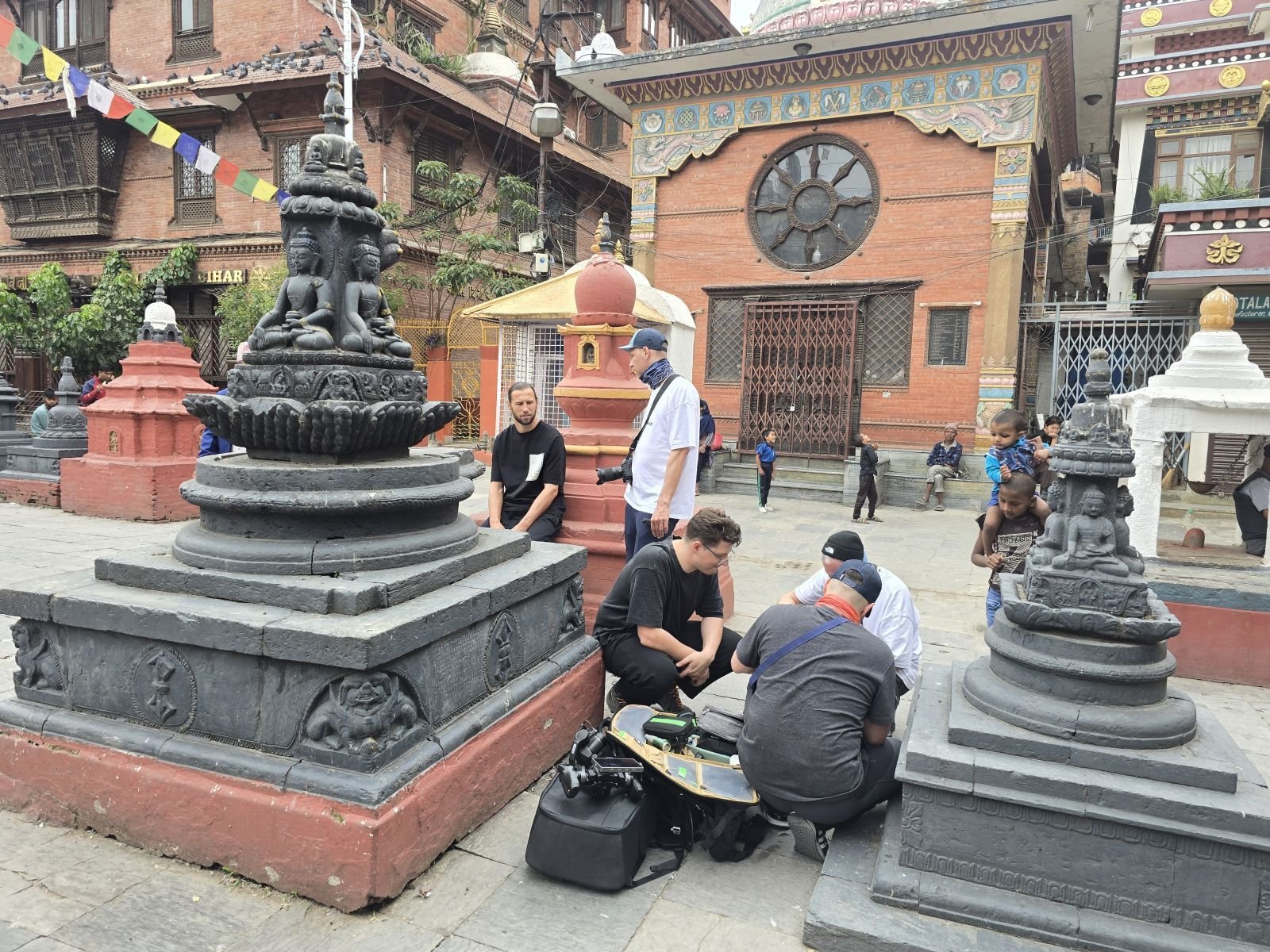
Confidentiality, document handling, and working with us
Because productions share sensitive material with us, from unreleased creative concepts to crew passport details, they reasonably ask how their information is handled. The short version is that we treat production materials as confidential, use controlled handling for the documents you share, and do not circulate your information beyond the purpose you engaged us for. The longer version lives in our dedicated document-security material, and we encourage you to read it rather than take a one-line summary as the whole picture.
Productions ask specifically about how they should send us material. The safest practice is to use the secure methods we provide rather than scattering sensitive documents across informal channels. Email in particular has known limitations for sensitive attachments, and we would rather guide you to a controlled route than have important documents sitting in inboxes. When you begin working with us, we will point you to the appropriate way to share files so that your material is handled with the care it deserves from the start.
A related question is retention: how long we keep material and what happens to it afterwards. Our practice is to retain what is needed for the engagement and to handle deletion responsibly, again as set out in our security material. We do not treat your documents as ours to keep indefinitely without reason, and we do not repurpose your creative or personal information for anything beyond the work you hired us to do.
Productions also ask what we expect from them in return, because confidentiality and smooth working run both ways. The most useful things a production can do are to provide accurate information rather than placeholders, to respond promptly when we request clarification, to tell us honestly about drone plans and sensitive or protected locations, and to flag changes as they happen. These client responsibilities are not bureaucratic box-ticking; each one directly reduces the chance of a delay or a surprise. Finally, productions sometimes ask how the working relationship is structured, from first contact to case closure. The pattern is generally an initial review of your project, a request for the information we need, a clear definition of scope, document preparation and checking, coordination of submission, handling of any clarification, attention to additional permissions, and care with decision records at the end. Knowing that shape in advance helps you see where your own input matters most.
| Question area | Who provides the core information | What we do | What we confirm rather than assume |
|---|---|---|---|
| Whether a permit applies | You, by describing your production type and plan | Assess which permission categories your plan likely touches | The exact requirement for your specific case |
| Which office or body applies | You, by listing locations and activities | Map likely permission strands and custodians | The current responsible body for your locations |
| Documents required | You, for company, crew, creative, equipment, schedule | Tell you what is expected, check for gaps and consistency | Any translation or authentication specifics |
| Cost picture | You, once locations and activities are defined | Explain cost drivers and structure the budget categories | Specific current figures against official sources |
| Timeline | You, by confirming dates and completeness | Map the sequence of dependencies for your plan | That no fixed number of days is promised |
| Drone feasibility | You, with honest aircraft and operator detail | Prepare mission materials and weigh alternatives | That permission is never guaranteed by us |
| Equipment and customs | You, via an accurate equipment list | Organise records and coordinate a customs specialist | That clearance is not ours to promise |
| Scope changes | You, by flagging changes early | Reassess and update preparation accordingly | That a late change may extend the schedule |
Common production questions mapped to who holds the answer and how it gets resolved. This is a planning aid, not a statement of fees, timelines, or specific authorities.
What this includes
- A plain-language explanation of what filming in Nepal generally requires for your production type
- Guidance on which permission categories your plan is likely to touch
- Help assembling and checking your documents for completeness and consistency
- Identification of gaps, mismatches, expired dates, and missing signatures before submission
- Coordination of submission steps and tracking of clarification requests
- Flagging of additional permission triggers such as drone, protected areas, and heritage sites
- Guidance on which documents may need translation or authentication
- Confidential, controlled handling of the materials you share with us
- Honest reporting on what a scope change affects and what new steps it introduces
- Confirmation of case-specific facts against current official sources during your review
What this does not include
- Issuing permits or granting any official permission (we are a private service, not a government body)
- Any guarantee of approval, timing, drone clearance, location access, or customs clearance
- Stated government fees, exact processing times, or a single named issuing authority asserted as fact without verification
- Entering your financial credentials or moving funds on your behalf without proper arrangements and instruction
- Specialist customs clearance work itself, which may require a customs specialist we coordinate rather than replace
- Legal or immigration advice, which sits outside our role
- Personalised assurances that a late change fits an unchanged timeline
- Sourcing or supplying equipment, crew, or talent as a core part of this permit-support scope
Frequently asked questions
For most organised filming with a crew, professional equipment, and a commercial, broadcast, or professional purpose, some form of permission is normally expected. The precise requirement depends on what you film, where, and why, which is why we confirm it for your case rather than issue a blanket yes or no. Filming without appropriate permission can lead to interruption, equipment being held, and problems that follow a production into future visits. Even a modest editorial team is usually better served by preparing properly than by hoping to stay unnoticed. If you tell us your exact plan, we can tell you what your specific situation is likely to require.
No. Film Permits Nepal is an independent, privately owned production-support company based in Kathmandu, and we are not part of any ministry, department, or official body. We do not issue permits, we do not grant permission, and we cannot approve, reject, or fast-track any application. What we do is help you prepare and organise the paperwork and coordinate the practical steps of getting it in front of the right people. Any company that tells you it can guarantee an official outcome is worth treating with caution, because no private service honestly can.
Earlier than you probably expect, because several preparation steps run in sequence rather than in parallel. Gathering authenticated company documents, collecting crew details, preparing creative materials, arranging translations, and allowing for clarification all take time, and each can depend on the one before it. Starting early does not commit you to anything, but it protects your shooting dates from avoidable pressure. We deliberately do not promise a fixed number of days, because timing depends on your locations, your completeness, and factors outside any private company's control. The single best thing you can do is begin the conversation as soon as your plan takes shape.
We will not print a specific government fee or protected-area charge as a fixed number, because those figures can change and because the applicable charge often depends on your exact category, location, and activity. Quoting a stale figure would be worse than quoting none, since you might budget against a number that no longer holds. What we can do is explain the cost drivers, structure your budget into the right categories, and confirm the specific current figures for your case against official sources during your review. That way your budget rests on verified numbers rather than on optimistic assumptions carried over from another production.
It depends on your locations and activities, and it can involve more than one body at once. A main filming permission may sit with one authority, while a heritage location, a protected area, road control, or drone use may each involve a different office or custodian. We will not name a single authority as your guaranteed issuer without checking, because doing so could mislead you. Once you share your locations and plan, we confirm the current responsible bodies for your specific case. Treat any older second-hand advice about who handles what as a starting point to verify, not a current guarantee.
Foreign productions almost always work through local coordination, both because the process runs more smoothly with someone on the ground and because certain steps are difficult to complete from abroad. A local coordinator understands current expectations, handles language where it matters, and can be physically present for steps that need it. This does not mean losing control of your project; with clear scope and regular updates you should always know where things stand. A coordinator cannot approve your application any more than we can, but a coordinator can remove a great deal of avoidable delay and misunderstanding from your path.
No, and you should be cautious of anyone who claims they can. Drone use typically involves separate considerations around the aircraft, the operator, registration, flight permission, airspace, and proximity to airports, with extra sensitivity near protected areas, heritage sites, and certain restricted zones. These constraints are about safety and sensitivity, not paperwork alone, and the decision does not sit within our control. Because of that uncertainty, we always encourage productions to plan a non-drone alternative for any shot that depends on aerial footage. Tell us early if a sequence relies on drone, and we will help you weigh the mission realistically.
Think in categories: application materials, authorisation materials, creative materials, crew records, equipment records, and schedule and location records, with extra categories when your plan includes triggers like drone or protected areas. You are the source for anything about your company, people, creative intent, equipment, and schedule, because only you hold that information accurately. We tell you what is typically expected, check what you provide, identify gaps, and organise everything into the expected form. Specialised items such as customs paperwork may involve a specialist we coordinate. The most common problems are mismatched names, expired dates, missing signatures, and inconsistent translations, all of which are easier to fix before submission.
Equipment handling and the main filming permission are related but separate strands, and neither substitutes for the other. Gear brought in for a shoot is generally expected to leave again, so accurate import and re-export records matter, along with a precise equipment list showing descriptions, quantities, and honest values. Batteries and any radio or wireless equipment deserve particular attention. Certain steps may involve a customs specialist rather than something we complete ourselves, and we can coordinate that. We never promise customs clearance, because that outcome is not ours to give, but an accurate list prepared early is one of the simplest ways to avoid a hold.
Scope changes are normal and manageable, but they are far easier to handle when flagged early and openly rather than concealed until the last moment. A change can ripple: adding a protected-area location may introduce a whole new permission strand with its own dependencies, and moving a date can collide with holidays you did not know about. When we know early, we can plan around it; when it surfaces late, it compresses an already tight schedule. We will assess what the change affects and tell you plainly what new steps it introduces. We will not promise that a late change fits an unchanged timeline, because that would not be honest.
We treat production materials as confidential, use controlled handling for the documents you share, and do not circulate your information beyond the purpose you engaged us for. When you begin working with us, we point you to secure methods for sharing files, because informal channels like email have known limitations for sensitive attachments. We retain what is needed for the engagement and handle deletion responsibly, and we do not repurpose your creative or personal information for anything beyond the work you hired us to do. The full detail lives in our document-security material, which we encourage you to read rather than rely on a one-line summary.
No. No private company can honestly guarantee an approval or a timeline, because the decision and the pace both sit with others. What we can promise is diligence: complete, consistent, correctly prepared paperwork presented in the form the process expects, so that avoidable delays are removed from your path. The part of timing you control is completeness and how promptly you respond to clarification; the part you do not control includes review times, closures, and additional permissions with their own clocks. Build buffer into your schedule, start early, and treat any promise of guaranteed approval or timing from anyone as a reason for caution.
Treat your previous experience as a helpful starting point, not a current guarantee. Regulations, charges, responsible bodies, and expectations can change over time, and what worked on a past visit may not reflect the present position. Reusing an old document set without checking is one of the more common ways productions create avoidable problems for themselves. Send us your current plan and we will confirm what still holds and what has moved, so your preparation reflects the situation as it is now rather than as it was then. Verifying is quick; discovering a changed rule mid-shoot is not.