Conservation areas in Nepal are among the most photogenic and sought after filming environments in the country, combining dramatic mountain landscapes, living cultural communities, and protected natural systems within a single boundary. They are also among the most layered environments to prepare for, because a conservation area is not simply a place you point a camera at. It is a managed landscape with its own governing institution, its own local committees, its own environmental limits, and its own seasonal rhythms, sitting on top of the national film permission framework that already applies to any foreign or commercial production in Nepal.
Film Permits Nepal is an independent private production support service based in Kathmandu. We are not a government office and we do not issue permits. What we do is help international and domestic productions prepare, organise, and coordinate the documentation and local arrangements that filming inside a conservation area typically requires, so that when your material reaches the authorities and local institutions that actually decide, it is complete, consistent, and easy to assess.
This page explains how conservation area filming preparation works in practice. It covers who manages these areas, why local institutions and community committees matter, the environmental and access considerations that shape a shoot, where drone plans overlap with conservation rules, how fees are verified rather than guessed, and how seasonal factors affect scheduling. Throughout, we describe the general workflow and the categories of documents a production usually assembles. We do not quote specific government fees, name a single issuing authority as fixed, or promise access, timing, or approval. Which institutions apply, what they charge, and how long any step takes depend on your exact locations and activities, and are confirmed against current official sources during your review.
How Conservation Areas Differ From Other Filming Locations
A conservation area in Nepal is a distinct category of protected landscape, and understanding that distinction is the starting point for any filming plan. Unlike a strictly protected reserve run only by central government staff, many conservation areas in Nepal operate through a partnership model in which a management institution works alongside local committees and resident communities. People live, farm, trade, and worship inside these boundaries. The land is protected, but it is also a home and a working landscape, and that dual character shapes every filming decision you make.
This matters for preparation because it means a single national film permission, while usually necessary, is rarely the whole picture. Filming inside a conservation area typically sits at the intersection of several layers: the national framework that applies to foreign and commercial productions generally, the rules and expectations of the body that manages the specific conservation area, and the consent of the local committees and communities whose settlements, trails, and viewpoints you intend to use. Each layer has its own logic and its own decision makers.
The practical consequence is that conservation area filming rewards early, detailed planning and penalises vague or last minute requests. A production that arrives with a precise location list, a realistic crew size, and a clear description of activity is far easier for local institutions to assess than one that describes its plan only as scenic mountain filming. The more concrete your intentions, the more accurately the right people can tell you what applies.
Our role is to help you see these layers clearly before you commit to a schedule. We map your described locations and activities against the categories of permission that conservation area filming commonly involves, identify where community coordination will be needed, and help you assemble the documentation each layer tends to expect. We do not assert which specific institution governs your chosen area as a fixed fact, because that depends on the area and on current arrangements. Instead, we frame the likely structure, then confirm the specifics against official sources as part of your review. That way you plan against reality rather than assumption.
- Conservation areas are lived in and worked in, not empty wilderness
- National film permission is usually necessary but rarely sufficient on its own
- Local committees and communities are genuine decision makers, not formalities
- Precise location and activity descriptions make assessment faster and cleaner
Conservation Area Management and Governing Institutions
Every conservation area is administered by some form of management institution, and identifying the correct one for your locations is a foundational step. In Nepal, conservation areas are often managed through arrangements that combine a central protected area framework with delegated local management structures. The exact body that reviews a filming request, and the exact route your request travels, depends on which conservation area you intend to enter and on the current management arrangement for that area.
We deliberately avoid naming one authority as the universal issuer for all conservation area filming, because that would misrepresent how the system works. Arrangements vary between areas, and they can change over time. What we can say confidently is that there is almost always a management institution with a legitimate interest in what is filmed inside its boundary, how large the production is, where it goes, and what it does there. Part of preparation is establishing, for your specific area, who that is and what they expect to receive.
In practice this means your filming request may need to align with more than one level at once. There is frequently a management office that oversees the conservation area as a whole, and there are frequently local units, committees, or councils operating at the settlement or valley scale. A request that satisfies the management level but ignores the local level, or the reverse, tends to stall. The aim is a package that reads coherently to everyone who touches it.
We help you prepare for this by structuring your documentation so it can be presented cleanly to whichever institution applies, and by keeping the description of your production consistent across every version of the request. Consistency matters more than most productions expect: mismatched crew numbers, vague dates, or a location list that shifts between documents are common reasons a request is questioned. We also help you plan the sequence, since some approvals sensibly precede others.
What we do not do is guarantee that any particular institution will approve your plan, promise how quickly it will respond, or assert that a named office is the current decision maker without confirming it. Those specifics are verified against official sources during your review, framed in conditional terms until confirmed, so that your planning rests on what is actually current rather than on a general assumption that may not hold for your area.
- Each conservation area has a management institution with a legitimate interest in filming
- Arrangements vary by area and can change, so the governing body is confirmed, not assumed
- Requests often need to align with both a management level and a local level
- Consistency across all documents reduces avoidable questions and delays
Local Institutions and Community Coordination
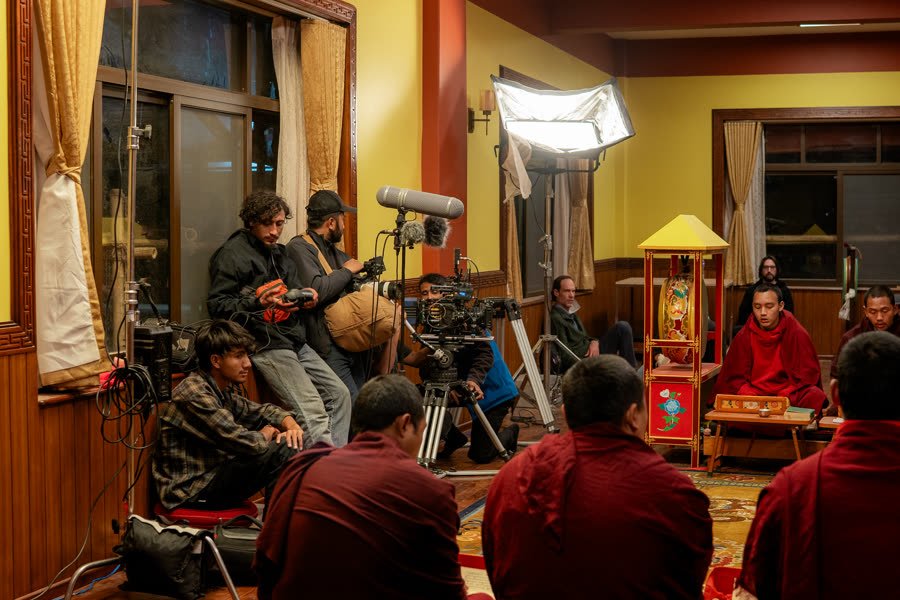
Because people live and work inside conservation areas, community coordination is not an optional courtesy. It is often a practical precondition for a shoot that runs smoothly and is welcomed rather than resented. Settlements within conservation areas frequently have their own committees and representative bodies that hold real influence over what happens on local trails, in villages, at viewpoints, and around homes, fields, and shared spaces. Engaging them early is one of the highest value things a production can do.
This coordination works on two levels. The first is procedural: certain local bodies may expect to be informed, consulted, or asked for consent before filming proceeds in their area, and their involvement can be part of how a request is legitimately assessed. The second is relational: the goodwill of a community shapes the day to day reality of a shoot, from whether people are comfortable appearing on camera to whether you can move equipment through a village without friction. Both levels reward respect and advance notice.
We help productions prepare for community coordination by clarifying what your presence will actually involve, then translating that into terms local representatives can respond to. How many people, for how many days, in which specific places, doing what. Whether residents will appear on camera and how their consent will be handled. Whether any local space, path, or resource will be used or temporarily affected. When these questions are answered in advance, coordination is far calmer than when a crew simply appears.
A recurring illustration is a small documentary crew planning to film daily life along a village trail. The scenic footage is straightforward, but the moment residents appear, or a household courtyard is used, consent and community awareness become central. A production that has thought this through, prepared simple consent arrangements, and given the local committee advance notice tends to be received warmly. One that has not can find doors closing, regardless of any higher level permission it holds.
We support this preparation but we are careful about what we promise. We do not guarantee that any community or committee will agree to your filming, nor that consent obtained is permanent or transferable. Community sentiment is real and cannot be commanded. What we can do is help you approach it properly, with clear information, genuine respect for local decision making, and documentation that records consent cleanly for your own records and for anyone who later assesses your production.
- Local committees inside conservation areas hold real influence over filming
- Coordination is both procedural (consent and consultation) and relational (goodwill)
- Answering who, how many, where, and doing what in advance calms the process
- Consent from residents is recorded cleanly but never assumed to be automatic
Environmental Limits and Safeguards
Conservation areas exist to protect natural systems, and that protective purpose sets limits on how filming can be conducted. Some limits are formal rules attached to the area, and some are practical expectations that responsible productions observe regardless of whether a rule is written down. Preparing well means anticipating both, because a production that visibly respects the environment is easier to welcome and less likely to face restrictions mid shoot.
Common categories of environmental consideration include how close crews may approach wildlife, whether and where lights or generators may be used, how sound may affect animals and residents, whether vegetation or terrain may be disturbed, and how waste is managed so that nothing is left behind. There may also be sensitivity around specific habitats, breeding periods, water sources, and areas of particular ecological or cultural importance. The exact constraints depend entirely on the area and on current management guidance.
We help productions think through these considerations in advance by working from your described activities rather than from generic assumptions. A crew filming static landscapes on foot poses very different questions from one bringing vehicles, artificial lighting, staged action, temporary structures, or large teams into a sensitive setting. The larger and more intrusive the footprint, the more environmental scrutiny it invites, and the more preparation it warrants.
A useful way to frame this is to design your shoot for the smallest reasonable footprint that still achieves your creative goal. Fewer people, lighter equipment, natural light where possible, established paths rather than new ones, and careful timing around sensitive periods all reduce both environmental impact and the friction your request encounters. Many productions find that planning for restraint improves both their footage and their reception.
We do not decide environmental rules, and we do not claim the authority to waive them. Where a specific safeguard applies to your area, we help you understand it in conditional terms and confirm it against current official guidance during your review, rather than asserting a fixed rule we cannot verify. What we consistently encourage is a genuinely low impact approach, because it aligns your production with the purpose of the place you want to film, and that alignment tends to make everything else easier.
- Conservation areas impose both formal rules and reasonable practical expectations
- Wildlife distance, lighting, sound, terrain, and waste are common considerations
- Larger or more intrusive footprints attract more scrutiny and more restrictions
- Designing for the smallest reasonable footprint reduces impact and friction
Access Routes and Equipment Movement
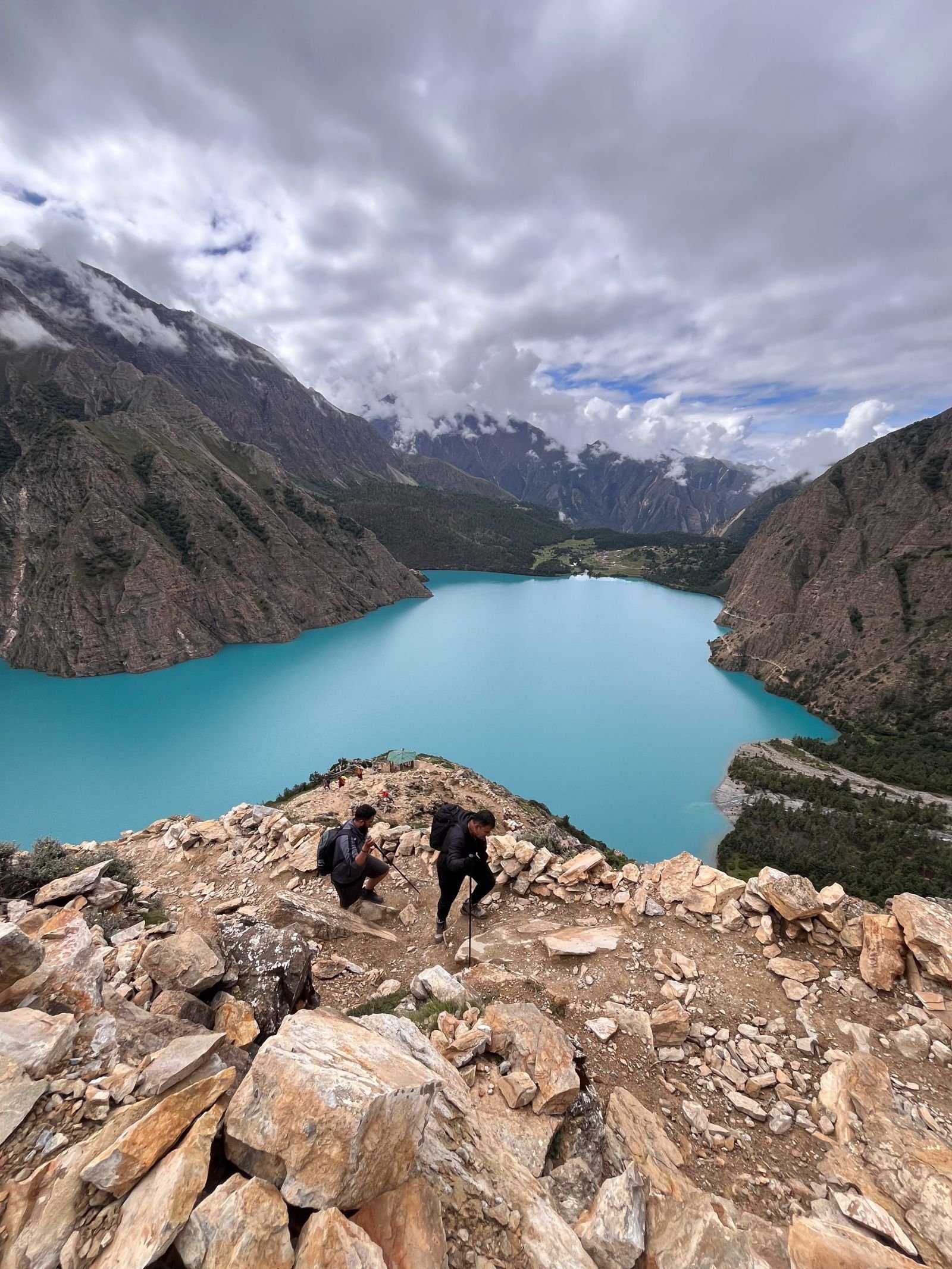
Getting a production and its equipment into and around a conservation area is a logistical challenge in its own right, and it deserves as much planning as the filming itself. Many conservation areas are reached by mountain roads, trails, or trekking routes rather than by convenient drive up access. This shapes what equipment you can realistically bring, how you move it, and how your schedule must be built around travel time and terrain.
Access planning begins with an honest look at how your gear will physically reach each location. Heavy or bulky equipment that is simple to deploy in a city can become a serious constraint on a trail. Some locations may require porters, pack animals, or staged transport, and some may make certain equipment impractical altogether. Building your equipment list around real access conditions, rather than an ideal, prevents expensive surprises on the ground.
Equipment movement inside a conservation area can also intersect with the area's own rules and with community coordination. Moving large amounts of gear through settlements, along shared trails, or across sensitive terrain is not neutral. It affects residents, other trail users, and the environment, and it may need to be communicated in advance. A production that plans its movement thoughtfully, and lets the right people know, avoids the impression of a large team arriving unannounced.
We help productions think through access and movement as an integral part of the plan rather than an afterthought. That includes matching your equipment list to your locations, flagging where terrain or access may force adjustments, and identifying where movement will need coordination with local institutions or communities. It also connects to your customs and equipment planning, since imported gear that is heavy or complex compounds both the border and the access challenge.
We do not arrange transport or guarantee that any route, road, or trail will be usable on your dates, since conditions in mountain areas change with weather and season. What we provide is structured preparation: helping you design an equipment and access plan that is realistic for the terrain, consistent with the area's expectations, and resilient to the ordinary uncertainties of filming in remote and protected landscapes.
- Many conservation areas are reached by trails or mountain roads, not easy drive up access
- Equipment lists should be built around real access conditions and terrain
- Moving gear through settlements and sensitive areas may need advance coordination
- Access planning connects directly to customs and imported equipment planning
Drone Filming Overlap in Conservation Areas
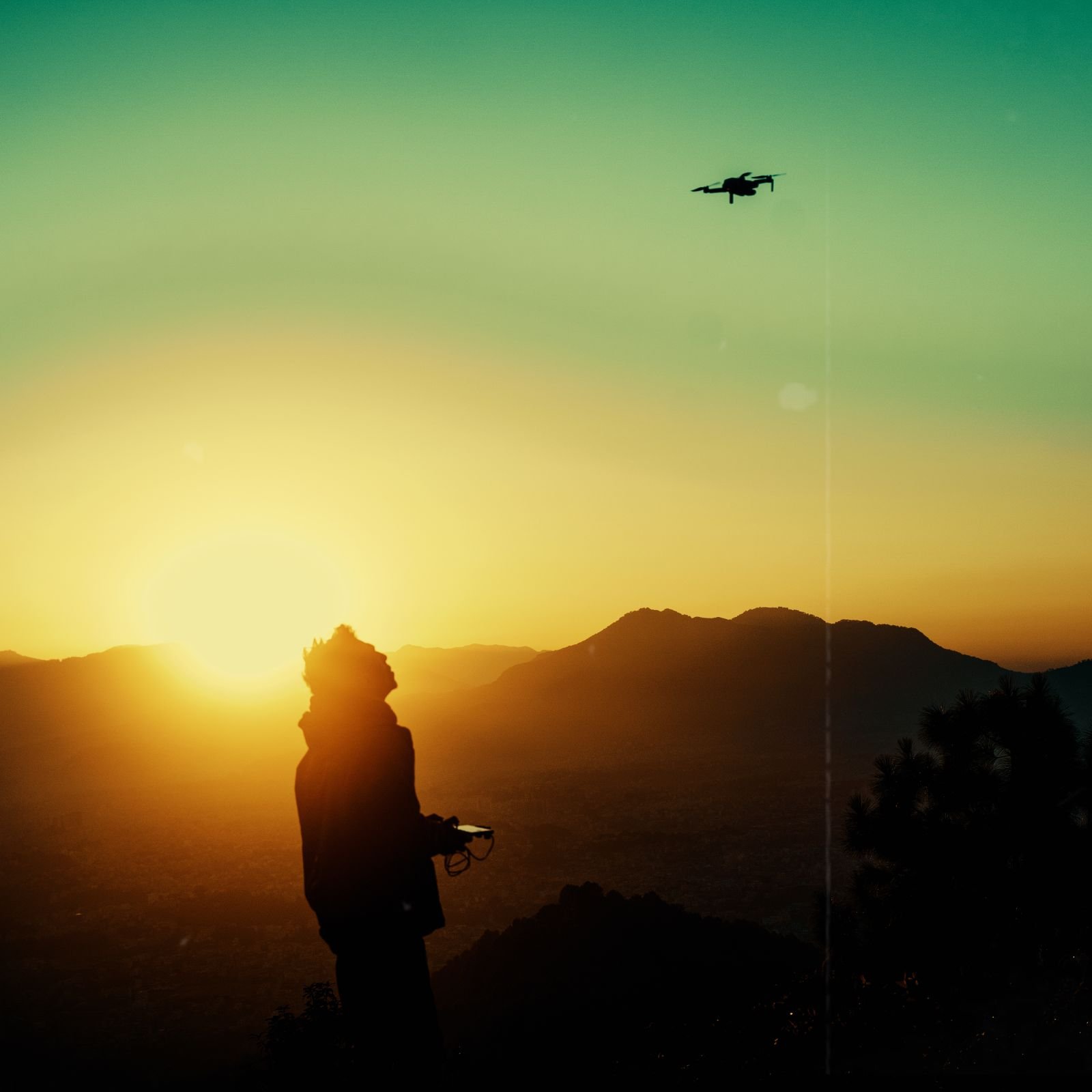
Drone footage is one of the most requested elements for conservation area filming, and it is also one of the most tightly considered. A drone plan inside a conservation area sits at the overlap of two separate concerns: the general rules that govern drone operation in Nepal, and the specific sensitivities of filming from the air inside a protected, often inhabited, and sometimes wildlife rich landscape. Both must be prepared for, and neither can be assumed.
On the general side, operating a drone in Nepal typically involves its own preparation around the aircraft, the operator, and permission to fly, entirely separate from your main filming permission. On the conservation side, aerial filming raises additional questions: disturbance to wildlife, intrusion over settlements and private spaces, noise in otherwise quiet environments, and proximity to sensitive or restricted zones. A conservation area may treat drone activity with particular caution for exactly these reasons.
Because of this overlap, we treat drone plans as a distinct workstream within conservation area preparation. The key is to describe your intended drone activity precisely: where you want to fly, how high, for how long, over what, and why. Vague drone ambitions are difficult for anyone to assess and easy to refuse. A specific, modest, well justified plan is far easier to prepare properly and to present to the institutions and communities involved.
We also encourage productions to plan for the possibility that some or all drone filming may not be feasible in a given area. Wildlife sensitivity, community privacy, airspace considerations, or area specific caution can all constrain aerial work. Having a considered fallback, whether ground based alternatives or adjusted locations, protects your production from being dependent on an outcome that is never guaranteed.
We do not promise drone permission, and we are explicit that no one preparing your documents can guarantee you will be allowed to fly inside a conservation area. What we do is help you assemble a coherent drone package, describe your intended missions clearly, understand where conservation and community sensitivities are likely to apply, and plan alternatives. The specific requirements and any restrictions for your area and dates are confirmed against current official sources during your review, not asserted in advance.
- Drone plans overlap general Nepal drone rules with conservation specific sensitivities
- Aerial filming raises wildlife, privacy, noise, and restricted zone concerns
- Precise mission descriptions are far easier to prepare and present than vague ambitions
- Drone permission is never guaranteed, so a ground based fallback is wise
Fee Verification Rather Than Fee Guessing
Cost is one of the first questions productions ask about conservation area filming, and it is also one of the areas where misinformation is most common. Figures circulate informally, get copied between productions, and quietly go out of date. Our approach is deliberately different: we verify the categories of cost that apply to your production against current official sources, rather than repeating numbers we cannot stand behind. On this page we describe cost structure, not specific amounts.
Conservation area filming can involve several distinct categories of cost. There may be entry related charges for accessing the area, charges connected to filming activity specifically, and separate costs for elements like drone work or larger crews. On top of any official charges sit your own production costs: local coordination, transport, porters or logistics for remote access, and the support fees for a service like ours. These categories are worth separating clearly so nothing is a surprise.
We do not publish or quote specific government or authority fees, and we do not estimate them from memory, because doing so risks giving you a number that is wrong, out of date, or inapplicable to your area. What we do is identify which categories of charge are likely relevant to your described plan, then confirm the current figures against official sources as part of your review. That confirmation is presented plainly, with the categories that apply and those that do not.
This matters for budgeting integrity. A production that builds a budget on a guessed figure can find itself materially off, in either direction, once real charges are confirmed. By separating what is certain about structure from what must be verified about amounts, we help you build a budget that is honest about what is known and what is still to be confirmed, rather than one that projects false precision.
Our own fees for support are a separate matter that we set out transparently in your engagement, distinct from any charges levied by authorities or institutions. We never present our support fee as an official cost, and we never suggest that paying us influences any official decision. The line between preparing documentation and deciding outcomes is one we keep clear, in fees as in everything else.
- Informal fee figures circulate widely and quietly go out of date
- Costs fall into categories: access, filming activity, drone, crew size, and logistics
- We confirm current figures against official sources rather than quoting from memory
- Our support fee is always separate from and independent of any official charge
Seasonal Dependencies and Scheduling
Season is not a minor detail for conservation area filming. In Nepal's mountain and protected landscapes, the time of year shapes access, weather, light, wildlife behaviour, community activity, and the feasibility of your entire schedule. Two productions with identical locations and identical documents can have completely different experiences depending on whether they film in a clear, stable window or a difficult one. Planning around season is therefore central, not peripheral.
Seasonal factors affect several things at once. Access routes that are straightforward in one season may be harder or impassable in another. Weather affects both safety and the reliability of your shooting days, and mountain conditions can change quickly. Certain periods may be more sensitive for wildlife, which can influence what filming is appropriate. Communities also have their own seasonal rhythms of farming, festivals, and trade that affect both their availability and the character of what you will film.
We help productions think about season early, because it interacts with everything else. A schedule that ignores seasonal reality can collide with weather, access, or sensitivity in ways that no amount of documentation can fix. Conversely, choosing a favourable window can make access easier, footage more reliable, and community coordination simpler. Where your creative needs point to a particular season, we help you plan realistically around its constraints.
A practical planning habit we encourage is building schedule buffer into remote and weather exposed shoots. Mountain filming rewards flexibility, and productions that plan contingency days tend to weather delays far better than those with no slack. This is a scheduling discipline rather than a permission matter, but it is closely tied to the reality of filming inside conservation areas, where the environment sets terms you cannot override.
We do not forecast weather, guarantee that any season will deliver particular conditions, or promise that access will be open on your dates. What we offer is structured awareness: helping you understand how season is likely to affect your specific plan, so that you choose your window deliberately and build a schedule resilient enough to absorb the ordinary uncertainties of protected mountain environments.
- Season shapes access, weather, light, wildlife, and community activity all at once
- Routes and conditions that are easy in one season can be hard in another
- Building buffer days into remote schedules absorbs weather and access delays
- We describe likely seasonal effects but never forecast weather or guarantee conditions
Building an Accurate Location List
Everything in conservation area preparation flows from an accurate, specific location list, and it is worth investing real effort in getting it right. A location list is not simply a set of place names. It is a structured description of exactly where you intend to be, what you intend to do there, how long you intend to stay, and how large your presence will be. The more precise this is, the more accurately every downstream question can be answered.
Vague location descriptions are one of the most common causes of confusion in conservation area filming. Scenic mountain views or a village somewhere in the area tells the people assessing your request almost nothing they can act on. By contrast, a list that identifies specific settlements, viewpoints, trails, or sites, paired with the activity planned at each, allows institutions and communities to give you meaningful answers about what applies and what is possible.
We help productions turn creative intentions into a workable location list. That involves pinning down the actual places behind a look or mood, distinguishing locations you are committed to from those you are still considering, and attaching to each the practical details that matter: crew size, equipment, activity, and duration. This structured list then becomes the backbone of your entire preparation, from community coordination to access planning to fee verification.
A well built location list also protects you against scope creep. When your locations and activities are documented precisely from the start, any later change is easy to identify and handle deliberately, rather than drifting in unnoticed. Conservation area institutions and communities tend to respond poorly to productions that quietly expand beyond what was described, so a clear baseline serves your interests as much as theirs.
We do not confirm that any specific location will be available to you, since availability depends on the institutions and communities that control access, and on conditions on the ground. What we ensure is that your list is precise enough to be assessed properly, consistent across all your documents, and honest about what is settled and what is still provisional. That precision is one of the single most valuable things a production can bring to conservation area filming.
- An accurate location list is the backbone of all conservation area preparation
- Specific settlements, viewpoints, and sites are assessable; vague descriptions are not
- Each location should carry crew size, equipment, activity, and duration
- A clear baseline makes later scope changes visible and manageable
Consent, Contributors, and People on Camera
Because conservation areas are inhabited, productions filming in them frequently end up filming people, whether as intentional contributors or incidentally as residents going about their lives. This makes consent a central part of preparation rather than a formality to handle later. How you approach the people who appear in your footage affects both the ethics of your production and its reception, and it deserves careful, advance planning.
There is an important distinction between intended contributors, such as interviewees or featured community members, and people who happen to be present, such as residents in a village you film through. Both raise consent considerations, but they are handled differently. Contributors typically warrant clear, recorded consent arrangements appropriate to how they will be used. Incidental presence in public settings raises its own questions that depend on context, prominence, and local sensitivity.
We help productions prepare consent arrangements that are clear, respectful, and appropriate to the setting. That includes thinking through who will appear, how their consent will be obtained and recorded, and how sensitive situations, such as filming in and around homes, private spaces, or during personal or cultural moments, will be handled. Getting this right in advance avoids awkward on the ground negotiations and protects both your contributors and your production.
This is also where community coordination and individual consent connect. In a close community, individual consent and community awareness reinforce each other. A production that has coordinated with local representatives and handles individual consent respectfully tends to find people comfortable and cooperative. One that treats consent casually can generate discomfort that spreads quickly through a small settlement and follows the production for the rest of its stay.
We support the preparation of consent documentation and the thinking behind it, but we do not obtain consent on your behalf as a decision, and we do not treat consent as a box to tick. Consent belongs to the people giving it, and it must be genuine. What we provide is the structure and materials to handle it properly, so that your production respects the people who make conservation area footage meaningful, and keeps clean records of how their participation was agreed.
- Inhabited conservation areas mean productions often film people, intentionally or not
- Intended contributors and incidental residents are handled differently
- Consent for sensitive settings like homes and personal moments needs advance planning
- Community coordination and individual consent reinforce each other
What Our Service Includes and How It Works
It helps to be concrete about what a support service like ours actually does across a conservation area project, because the value is in the preparation and coordination, not in any claim to decide outcomes. Our work is organised around a repeatable workflow that turns a rough filming idea into an organised, consistent, and assessable package, while keeping you clearly informed about what is certain and what remains to be confirmed.
The workflow usually begins with a readiness review. You describe your locations, dates, crew, equipment, and planned activities, and we assess how those map against the layers of permission and coordination that conservation area filming commonly involves. From there we identify what documentation each layer tends to expect, where gaps exist in what you have, and what needs to be confirmed against official sources for your specific area.
We then help you assemble and organise the documentation, keeping the description of your production consistent across every element. This is where much of the practical value sits: a coherent, internally consistent package that reads cleanly to a management institution, a local committee, and any activity specific reviewer is far more likely to move smoothly than a scattered collection of mismatched documents. We also help you plan the sequence of steps and the community coordination that supports them.
Alongside preparation, we support the ongoing life of a project: handling clarifications when more information is requested, managing scope changes when your plan evolves, and keeping records of decisions and consents in order. Conservation area filming rarely stays perfectly static from first plan to final shoot, and a large part of our value is helping you handle change deliberately rather than reactively.
What we do not do is equally important to state. We do not issue permits, we do not decide any outcome, we do not guarantee approval, access, timing, or drone permission, and we are not a government body. We prepare, organise, coordinate, and verify, and we keep the line between that work and official decision making clear at every step. Understanding that boundary is what lets us be genuinely useful without overpromising.
- Work is organised around a repeatable readiness, preparation, and coordination workflow
- A consistent, coherent documentation package is the core practical deliverable
- We support clarifications, scope changes, and record keeping across the project
- We prepare and coordinate but never issue permits or decide outcomes
Client Responsibilities in Conservation Area Filming
A successful conservation area project is a genuine partnership, and there are responsibilities that sit clearly with the production rather than with a support service. Being clear about these from the start prevents misunderstanding and helps your project move efficiently. The quality of what we can prepare depends directly on the quality and honesty of what you provide, and on your engagement with the decisions that are yours to make.
First, accuracy of information is your responsibility. The location list, crew details, equipment inventory, dates, and activity descriptions you give us form the foundation of everything we prepare. If these are vague, incomplete, or inaccurate, the documentation built on them will inherit those problems. Providing precise, honest information, and updating us promptly when plans change, is the single most important thing you can do.
Second, the substantive decisions about your production remain yours. What you film, where you commit to going, how you treat contributors and communities, what creative and ethical choices you make, and whether you proceed under the conditions that apply are your decisions. We inform and prepare, but we do not make these choices for you, and we cannot accept responsibility for the underlying conduct of your production.
Third, respectful conduct on the ground is your responsibility and cannot be delegated. No amount of preparation substitutes for how your crew actually behaves inside a conservation area: how you treat residents, how you handle wildlife and terrain, whether you honour the consent and coordination arrangements you agreed, and whether you leave the environment as you found it. Your conduct is the production, in the eyes of the communities and institutions you deal with.
Finally, you are responsible for engaging with the conditional nature of this work. Regulatory specifics are confirmed, not assumed, and some things cannot be known until they are checked or decided by others. A production that understands and plans for this, building in contingency and avoiding dependence on unguaranteed outcomes, works with the reality of conservation area filming rather than against it. We are candid about uncertainty precisely so you can plan around it responsibly.
- Accurate, honest, up to date information from you underpins everything we prepare
- Substantive creative and ethical decisions remain the production's own
- Respectful conduct on the ground cannot be delegated to any service
- Planning for conditional outcomes and building contingency is the client's role
Common Mistakes and How to Avoid Them
Certain mistakes recur often enough in conservation area filming that they are worth naming directly, because most are entirely avoidable with earlier and more careful planning. Recognising these patterns lets you sidestep them rather than learning from them the hard way, on the ground, when they are expensive and stressful to fix.
The most common mistake is treating a national film permission as the whole requirement and overlooking the conservation area layers entirely. Productions sometimes arrive believing one clearance covers everything, only to discover that management institutions and communities have their own expectations. Recognising early that conservation area filming is layered, and preparing for each layer, prevents this collision.
A second frequent mistake is vagueness. Imprecise location lists, unclear activity descriptions, and inconsistent crew numbers across documents all slow assessment and invite questions. The fix is precision and consistency from the outset: one accurate description of your production, carried faithfully through every document. This single discipline resolves a surprising share of problems before they occur.
A third mistake is neglecting community coordination until the last moment, or skipping it in the belief that higher level permission is sufficient. Communities inside conservation areas are decision makers in their own right, and treating them as an afterthought generates friction that no paperwork can undo. Early, respectful engagement is far more effective than late scrambling to repair a poor first impression.
Other recurring errors include underestimating access and terrain, so that equipment cannot physically reach locations; building budgets on guessed fees that turn out wrong; assuming drone filming will simply be allowed; and ignoring season, so that weather or access undermines the schedule. Each of these traces back to the same root: planning too late, with too little specificity, and too much optimism about what is guaranteed. The remedy in every case is the same. Plan early, describe your production precisely, coordinate with communities in advance, verify specifics rather than assuming them, and build contingency for the things you cannot control. Productions that adopt these habits consistently have smoother, calmer conservation area shoots than those that do not.
- Assuming national permission covers everything and ignoring conservation layers
- Vague, inconsistent location and crew descriptions that slow assessment
- Leaving community coordination too late or skipping it entirely
- Underestimating access, guessing fees, assuming drone approval, and ignoring season
Confidentiality and Document Handling
Productions preparing to film in conservation areas share a range of information with us, some of it sensitive, and we treat the handling of that information as a serious responsibility. Scripts, treatments, contributor details, crew information, equipment inventories, and location plans can all carry commercial or personal sensitivity, and productions are right to expect them to be handled with care.
Our general approach is to collect only what is genuinely needed to prepare your documentation and coordination, to handle it carefully while your project is active, and to be transparent about how it is stored and who can access it. We treat your production details as confidential to your project and do not repurpose them for unrelated ends. The specifics of our document handling and security practices are set out in our dedicated policies, which we make available so you can understand exactly how your information is treated.
This matters particularly for conservation area work because of the community and contributor dimension. Information about individuals who will appear on camera, about sensitive locations, and about the specifics of your plan deserves careful handling not only for your commercial protection but out of respect for the people involved. Consent records and contributor details are handled with that dual responsibility in mind.
We are also honest about the limits of any communication channel. Ordinary email, for example, has inherent limitations, and where more secure handling of sensitive documents is appropriate we prefer arrangements designed for that purpose. We would rather be candid about these realities than imply a level of security that no ordinary channel can provide. Being straightforward about limitations is part of handling information responsibly.
What we do not do is treat confidentiality as a marketing claim detached from practice. We describe our handling honestly, apply it consistently, and point you to the detailed policies that govern it, rather than making sweeping promises. If you have specific confidentiality requirements for your production, raising them early lets us plan the handling of your information accordingly, within the genuine capabilities of the tools and channels available.
- We collect only what is needed and handle it carefully while your project is active
- Contributor and community information is treated with particular care
- We are candid about the limits of ordinary channels like email
- Detailed handling and security practices are set out in dedicated policies
| Element | Who prepares it | Purpose | Format |
|---|---|---|---|
| Detailed location list | Production, refined with our support | Lets institutions and communities assess exactly where and what you intend to film | Structured document with sites, activity, crew size, and duration per location |
| Activity description | Production, structured with our support | Explains what will actually happen at each location so scrutiny is proportionate | Written summary per location, consistent across all documents |
| Crew list | Production | Establishes the size and composition of your on the ground presence | Named list with roles and relevant details |
| Equipment inventory | Production, reviewed with our support | Supports access planning, customs planning, and activity assessment | Itemised list with quantities and relevant specifications |
| Community coordination plan | Prepared jointly, engaged by production | Ensures local committees and residents are informed and consulted in advance | Plan describing who is contacted, when, and about what |
| Consent arrangements | Production, structured with our support | Records agreement from contributors and residents who appear on camera | Consent records appropriate to how contributors are used |
| Drone mission description | Production, structured with our support | Allows precise assessment of any aerial filming and its sensitivities | Mission by mission description of location, height, duration, and subject |
| Access and logistics plan | Production, reviewed with our support | Confirms equipment can physically reach locations given terrain and season | Route and transport plan aligned to the location list |
| Fee category confirmation | Verified with our support against official sources | Identifies which categories of charge apply, with current figures confirmed | Confirmed summary presented during review, not quoted in advance |
Common preparation elements for conservation area filming, showing who typically prepares each and its purpose. This is a planning aid, not a fee schedule or an assertion of specific requirements, which are confirmed for your area during review.
What this includes
- Readiness review mapping your locations and activities against the layers of permission and coordination conservation area filming commonly involves
- Help building a precise, consistent location list and activity description as the backbone of your preparation
- Structuring and organising the documentation each layer tends to expect, kept internally consistent across every element
- Guidance on community coordination with local committees and residents, and preparation of clear consent arrangements
- Preparation of a distinct drone workstream, including precise mission descriptions and planning for fallbacks
- Access and equipment movement planning matched to real terrain and season, connected to customs and equipment planning
- Verification of which fee categories apply, with current figures confirmed against official sources rather than quoted from memory
- Support for clarifications, scope changes, and clean record keeping across the life of the project
- Candid guidance on seasonal dependencies and the value of building contingency into remote schedules
What this does not include
- Issuing any permit or permission, or acting as any government or protected area authority
- Guaranteeing approval, access, timing, drone permission, or any particular outcome from any institution or community
- Quoting specific government or authority fees, or asserting a single named issuing authority as fixed for your area
- Obtaining consent from communities or contributors as a decision on your behalf, or commanding community goodwill
- Forecasting weather or guaranteeing that any season, route, road, or trail will be usable on your dates
- Arranging transport, porters, or logistics as a booked service, as opposed to helping you plan them
- Making the substantive creative, ethical, or conduct decisions that belong to your production
- Providing legal advice or personalised guarantees about regulatory provisions, which are confirmed against official sources
Frequently asked questions
Usually not on its own. A national film permission is commonly necessary for foreign and commercial productions, but conservation area filming typically adds further layers, including the expectations of the body that manages the area and the consent of local committees and communities. Treating one clearance as the whole requirement is one of the most common and costly mistakes. The specific combination that applies to your locations is confirmed during your review rather than assumed.
Conservation areas in Nepal are often administered through arrangements that combine a central protected area framework with delegated local management structures, and the exact body that reviews a filming request depends on the specific area and on current arrangements. We deliberately do not name one authority as the universal issuer, because that would misrepresent how the system works and arrangements can change. Part of preparation is establishing, for your particular area, who the relevant institution is and what they expect. That specific is verified against official sources during your review.
In most cases, yes, and it is one of the highest value things you can do. People live and work inside conservation areas, and local committees and residents hold genuine influence over what happens on their trails, in their villages, and around their homes. Coordination is both procedural, because certain bodies may expect to be informed or consulted, and relational, because community goodwill shapes the day to day reality of your shoot. Early, respectful engagement consistently produces smoother filming than arriving unannounced.
No. No one preparing your documents can guarantee drone permission inside a conservation area. Drone plans sit at the overlap of general Nepal drone rules and the specific sensitivities of aerial filming over protected, often inhabited, and sometimes wildlife rich landscapes. We help you assemble a coherent drone package, describe your intended missions precisely, and plan ground based alternatives in case aerial work is constrained. The actual requirements and any restrictions for your area and dates are confirmed against official sources, never promised in advance.
We describe cost structure rather than quoting specific figures, because informal numbers circulate widely and quietly go out of date. Conservation area filming can involve categories such as access related charges, charges connected to filming activity, and separate costs for elements like drone work or larger crews, alongside your own logistics and our support fee. We identify which categories apply to your plan and confirm current figures against official sources during your review. Our support fee is always separate from and independent of any official charge.
There is no single answer, because season shapes access, weather, light, wildlife behaviour, and community activity all at once, and the right window depends on your specific locations and creative needs. Routes and conditions that are straightforward in one season can be difficult or impassable in another, and some periods are more sensitive for wildlife or busier for communities. We help you understand how season is likely to affect your particular plan so you can choose deliberately. We do not forecast weather or guarantee that any season will deliver particular conditions.
As precise as you can make it, because the location list is the backbone of all preparation. Descriptions like scenic mountain views tell the people assessing your request almost nothing they can act on, whereas specific settlements, viewpoints, trails, and sites, each paired with the planned activity, crew size, and duration, allow meaningful answers. A precise list also protects you against scope creep by making any later change easy to identify and handle deliberately. We help you turn creative intentions into a workable, consistent list.
Scope changes are normal in conservation area filming, and handling them deliberately is part of our work. If your locations, activities, crew, or equipment change, we help you update your documentation consistently and identify where the change affects community coordination, access, fees, or any activity specific consideration. The key is to surface changes promptly rather than letting them drift in unnoticed, because conservation area institutions and communities respond poorly to productions that quietly expand beyond what was described. A clear original baseline makes this far easier to manage.
We help you prepare consent arrangements and the thinking behind them, but consent itself belongs to the people giving it and must be genuine. We do not obtain consent as a decision on your behalf, and we do not treat it as a box to tick. What we provide is the structure and materials to handle consent properly, including how it is recorded for contributors and how sensitive situations such as filming around homes or during personal moments are approached. Individual consent and community coordination reinforce each other, and both reward respect and advance planning.
Significantly. Many conservation areas are reached by trails or mountain roads rather than convenient drive up access, so equipment that is simple to deploy in a city can become a serious constraint on the ground. Some locations may require porters or staged transport, and some may make certain gear impractical. We help you match your equipment list to real access conditions, flag where terrain may force adjustments, and connect this to your customs and imported equipment planning. Building your list around reality prevents expensive surprises during the shoot.
No. Film Permits Nepal is an independent private production support service based in Kathmandu. We do not issue permits, we are not a government or protected area authority, and we do not decide any outcome. Our work is to prepare, organise, coordinate, and verify the documentation and local arrangements that conservation area filming typically requires, so your material is complete and consistent when it reaches the institutions and communities that actually decide. We keep the line between that support and official decision making clear at every step.
Conservation areas exist to protect natural systems, so expect both formal rules and reasonable practical expectations around how filming is conducted. Common considerations include how close crews may approach wildlife, whether and where lights or generators may be used, how sound may affect animals and residents, whether terrain or vegetation may be disturbed, and how waste is managed. The exact constraints depend on the area and on current guidance, which we confirm in conditional terms during your review. We consistently encourage designing your shoot for the smallest reasonable footprint.
To begin a useful readiness review, we need your intended locations described as specifically as possible, your shoot dates, a crew list, an equipment list, and a clear description of the activities you plan at each location. If drone filming is intended, a description of the missions you have in mind helps considerably. The more precise and honest this information is, the more accurately we can map it against the layers of permission and coordination that apply, identify gaps, and tell you what needs to be confirmed against official sources for your specific area.
No, and we are deliberately careful about timing. The steps involved in conservation area filming depend on your locations, your activities, the institutions and communities involved, and factors outside anyone's control, so we do not promise specific durations or guarantee that any step will complete by a given date. What we do is help you understand the sequence of steps, prepare thoroughly and early, and build sensible contingency into your schedule, especially for remote and weather exposed shoots. Planning for uncertainty rather than against it is the most reliable way to protect your production.
We collect only what is genuinely needed to prepare your documentation and coordination, handle it carefully while your project is active, and are transparent about how it is stored and who can access it. Contributor details, location plans, and consent records are treated with particular care, both for your commercial protection and out of respect for the people involved. We are also candid about the limits of ordinary channels such as email, and prefer more secure arrangements for sensitive documents where appropriate. Our detailed handling and security practices are set out in dedicated policies you can review.