Filming inside a national park in Nepal is one of the most rewarding location choices a foreign production can make, and also one of the most layered from a permission standpoint. A national park is not an ordinary location. It sits under protected-area management, it carries wildlife and environmental safeguards, and it usually requires a separate location-specific permission that runs alongside, not instead of, your main film permit. Understanding how these layers fit together before you commit shooting days is the single most useful thing you can do for your schedule and your budget.
Film Permits Nepal is an independent, privately operated production-support service based in Kathmandu. We are not a government office, we do not issue permits, and we do not control access to any park. What we do is help international productions prepare cleanly: we map the layers that apply to your specific park and activity, we assemble and review the documents a foreign production typically needs, and we coordinate the practical steps so your paperwork arrives in a usable state. The regulatory details for protected areas change over time and vary by park, so throughout this page we describe categories, workflows and considerations rather than asserting fixed fees, timelines or a single named authority. Any specific figure or authority relevant to your project is confirmed against current official sources during your review.
This page explains how national park filming permission relates to your main film permit, which additional layers commonly apply, how location-specific applications are typically prepared, what wildlife and environmental safeguards mean in practice, and where schedules most often slip. It is written for producers, line producers, fixers and production coordinators who are weighing a park location and want a clear, honest picture before they build a plan around it.
How national park filming relates to your main film permit
The most common misunderstanding we see is the assumption that a single approval covers everything. In practice, filming inside a Nepali national park usually sits on top of your main film permit rather than replacing it. Think of the main film permit as the approval that recognises your production as a legitimate filming activity in the country. The protected-area permission is a separate layer that governs whether, how and under what conditions you may film inside that specific park. Both can matter, and they are prepared and assessed on different tracks.
Because they are separate, they also move on separate clocks. Your main film permit preparation depends on producer documents, crew records, equipment records and a clear description of your project. The park permission depends on location-specific details: which zones you want to enter, what you intend to film, how large your footprint is, and whether your activity touches wildlife or sensitive habitat. A production can have a clean main permit position and still need substantial additional work on the park side, or the reverse.
The reason we stress this early is scheduling. If you plan as though one approval unlocks the park, you may build a shooting schedule that assumes access you have not yet secured. When the park layer turns out to need its own lead time, the schedule that looked comfortable becomes tight. Treating the two layers as parallel workstreams from the start, each with its own document set and its own point of contact, is far safer.
It also matters for how you describe your project. The way a production is framed for the main permit should be consistent with how it is described for the park. Inconsistencies between what you tell one process and another are a frequent source of clarification requests, and clarification requests cost time. Part of our preparation work is making sure your project description, your activity list and your location plan read as one coherent story across every layer.
Which specific authority handles the park layer, and exactly how it relates procedurally to the main permit, depends on the park and on current arrangements. We confirm that mapping against official sources for your particular location rather than assuming a single standing structure, because protected-area administration is exactly the kind of detail that is best verified fresh for each project.
The possible protected-area authority
National parks in Nepal fall under protected-area management, and the body that administers a given park is the starting point for any location-specific permission. We deliberately describe this as a possible authority rather than naming one as the fixed issuer for your project, because protected-area arrangements can differ by park and can change, and asserting a single current authority as verified fact would be misleading. During your review, the applicable body for your specific park and activity is confirmed against current official sources.
What is stable enough to plan around is the shape of the relationship. Protected-area management exists to balance access with conservation. That mandate colours everything about how filming requests are considered. A request that is small, low-impact and clearly respectful of wildlife and habitat is a very different proposition from one that involves large crews, heavy equipment movement, artificial lighting, sound, or any activity that could disturb animals or vegetation. The authority is not simply approving a shoot; it is weighing your presence against its conservation responsibilities.
This is why the quality of your submission matters so much. A vague request invites caution, because the person assessing it cannot see your footprint clearly. A precise request, one that states exactly where you want to be, what you intend to do, how many people are involved, what equipment you are bringing and what safeguards you will observe, gives the authority something concrete to assess. Precision is not just courtesy; it is the difference between a request that can be evaluated and one that stalls.
There may also be more than one relevant body depending on your activity. If your park plan overlaps with a buffer zone, a community-managed area, a heritage feature inside the park, or airspace considerations for drones, additional coordination may be required beyond the core protected-area permission. Part of our role is identifying, from your shot plan, which of these overlaps are likely to apply so they are addressed deliberately rather than discovered late.
We never promise a particular outcome, timing or level of access from any authority. What we can do is help you present a request that is complete, accurate and easy to assess, which is the part of the process a production can actually control. The decision itself, and the exact conditions attached to it, rest with the relevant body and are theirs to determine.
Location-specific application and why it is separate
A national park permission is location-specific in a way that a general film permit is not. It is tied to particular zones, particular dates and a particular set of activities. This specificity is a feature, not an obstacle: it exists because a park is a managed environment where the impact of your presence depends heavily on exactly where you go and what you do there. A request to film a static interview near a park entrance is not the same as a request to move a crew deep into core habitat, and the permission reflects that.
Preparing a location-specific application starts with a clear map of intent. We work with your team to translate creative ambitions into concrete location terms: which areas of the park you actually need, in what order, on which days, and for how long at each. Directors often think in terms of look and feel; a park application needs that translated into zones, access routes and time on the ground. Bridging that gap early prevents a common problem, where a shot list implies access to areas the production never explicitly requested.
The application also has to describe activity honestly. If you intend to use a tripod and a small camera team, say so. If you intend to bring vehicles, lighting, a larger crew, or any element that changes your footprint, that belongs in the request from the beginning. Adding significant activity later, after a permission was granted on a smaller basis, generally means going back through a scope-change process, which we cover separately on this page. It is almost always faster to describe your real plan up front than to seek a permission on a reduced description and expand it afterwards.
Because the park layer is location-specific, it does not travel. A permission prepared for one park does not carry over to another, and a permission for certain zones does not automatically extend to others. Productions filming across multiple protected areas should expect to prepare a distinct request for each, each with its own document set and its own lead time. Building a schedule that assumes one park approval covers a wider region is a planning error we see often and want you to avoid.
We assemble the location-specific package so that it reads clearly and matches the rest of your documentation. The exact contents, format and supporting materials expected for a given park are confirmed during your review, because these details are set by the relevant authority and are best verified for your specific location rather than assumed from a general template.
Wildlife and environmental safeguards in practice
Wildlife and environmental safeguards are the heart of why national park filming is treated differently from filming almost anywhere else. A park exists to protect its ecosystem, and any filming activity is assessed through that lens. For a production, this means safeguards are not an afterthought bolted onto an approved shoot; they shape what you can request in the first place and how your request is received.
In practical terms, safeguards tend to cluster around a few themes. The first is disturbance to animals. Anything that could stress, displace or alter the behaviour of wildlife is viewed with caution, from loud sound and sudden movement to prolonged close approach. The second is disturbance to habitat, which covers vegetation, water sources, nesting or breeding areas and the physical ground itself. The third is the residue of your presence, meaning waste, materials, and any trace left behind. A well-prepared production plans to leave a park exactly as it found it.
These themes translate into concrete planning choices. Crew size is often the first lever, because a smaller footprint is inherently less disruptive. Equipment choices matter too: quieter kit, minimal lighting, and gear that can be carried rather than driven all reduce impact. Movement discipline, keeping to defined routes and staying out of sensitive zones, is frequently a condition of access. Timing can matter as well, since certain seasons or times of day are more sensitive for wildlife than others. We help you think through these levers before you submit, so your request already reflects a low-impact posture.
There is also a documentation dimension. A production that can clearly describe its safeguards, how it will manage waste, how it will limit noise, how it will keep crew within agreed boundaries, presents a much stronger case than one that treats the shoot as if the park were a neutral backdrop. Demonstrating that you understand the conservation stakes is part of showing that you can be trusted with access.
We do not decide what safeguards a particular park will require, and we do not promise that any given plan will satisfy them. What we do is help you anticipate the likely areas of concern for your activity and shape your request accordingly, then confirm the specific conditions that apply against current official sources. The goal is a plan that respects the park on its own terms, which is both the right thing to do and the approach most likely to be received well.
Restricted activities and what tends to draw scrutiny
Not every filming activity is treated equally inside a national park. Some activities are routine and low-impact; others draw close scrutiny or may not be permitted at all. Knowing which category your plan falls into, before you build a schedule around it, saves a great deal of difficulty. We describe these as tendencies rather than fixed rules, because what is restricted in a given park is set by the relevant authority and confirmed against current sources for your specific location.
Activities that commonly attract scrutiny include anything that disturbs wildlife directly, such as baiting, calling, or approaching animals closely for a shot. Artificial lighting is often sensitive, particularly at times or in places where it could affect nocturnal or breeding behaviour. Amplified or loud sound raises similar concerns. Any construction, set dressing, or physical alteration of the environment, even something as apparently minor as clearing vegetation for a camera position, tends to be viewed cautiously. Introducing vehicles beyond established routes, using large crews, or occupying an area for extended periods all increase your footprint and therefore the level of consideration your request receives.
Drone use is a category of its own and frequently overlaps with park filming. A drone can disturb wildlife, intrude on sensitive zones, and raise airspace considerations all at once, which is why it is often treated as a separate permission layer rather than an incidental piece of equipment. We cover the drone overlap in more detail below, but the key point here is that adding a drone to a park plan meaningfully changes the shape of what you are requesting.
Some activities may simply be off the table in certain parks or certain zones, regardless of how carefully they are proposed. It is far better to learn this during preparation than to design a sequence around a shot that was never realistically available. Part of our review is testing your shot intentions against the likely restrictions for your park, so that creative planning is grounded in what is plausible rather than what would be ideal in an unrestricted location.
We never promise that a restricted activity will be allowed, and we do not advise finding ways around restrictions. Our role is to help you understand where your plan sits, prepare the strongest honest case for the activities that are realistic, and identify alternatives for the ones that are not. A production that adjusts its ambitions to fit a park's constraints is in a much stronger position than one that submits an aggressive plan and hopes.
Guide, liaison or escort requirements
Many national parks expect filming activity to be accompanied. This can take the form of a guide, a liaison, an escort, or a similar arrangement, and it exists for reasons that serve both the park and the production. An accompanying person helps ensure that crews stay within agreed boundaries, that safeguards are observed, and that the production has someone on the ground who understands the park's expectations. For a foreign crew unfamiliar with the environment, this presence is often genuinely useful rather than merely procedural.
Whether such accompaniment is required, and in what form, depends on the park and on your activity. A larger, deeper or more equipment-heavy shoot is more likely to involve accompaniment than a small, brief presence near an accessible area. We describe this as a common expectation rather than a universal rule, because the specifics vary and are confirmed against current sources for your particular location during your review.
For planning purposes, the important thing is to assume the possibility and build it into your thinking early. An accompanying requirement can affect your schedule, since it means coordinating with another person's availability and briefing them on your plan. It can affect your crew logistics, since it adds a person to your ground movements. And it can affect how your day runs, since the accompanying person may have views on routes, timing and behaviour that you will need to respect. None of this is onerous when anticipated; it becomes friction only when it is discovered on the day.
There is also a relationship dimension worth naming. An accompanying guide or liaison is often your most direct line to how the park actually works in practice. A production that treats that person as a partner, briefs them well, listens to their guidance and respects their role tends to have a smoother experience than one that treats them as an obstacle. Good on-the-ground relationships do not change the rules, but they make working within the rules considerably easier.
Our part is to flag, from your shot plan, where accompaniment is likely to apply, to help you factor it into your schedule and logistics, and to make sure your request reflects an understanding that you may be filming alongside a park representative. We do not arrange or guarantee any particular guiding or escort outcome, and the specifics are confirmed for your park during preparation. What we can ensure is that the possibility is planned for rather than assumed away.
Entry, filming and location charges
Filming inside a national park typically involves charges of some kind, and it is important to be honest about what we can and cannot tell you in advance. There are usually costs associated with entry and with filming activity, and these can differ by park, by activity, by crew size, by equipment, and by other factors. We do not publish specific amounts on this page, and we will not quote you a fixed figure as though it were verified, because protected-area charges are exactly the kind of detail that changes and that must be confirmed against current official sources for your particular case.
What we can do is help you understand the structure of what to budget for, so you are not surprised. Charges commonly relate to several distinct things. There may be entry costs tied simply to accessing the park. There may be filming-related charges tied to the fact that you are conducting a commercial or professional activity rather than visiting as a tourist. There may be charges that scale with the size and nature of your footprint, so a larger crew or heavier equipment can affect the total. And there may be additional costs for specific elements such as drones or vehicles.
Because these charges are layered, the safest approach is to treat your park budget as a range with several components rather than a single number, and to leave room for the figures to be confirmed. Productions that pin a tight budget to an assumed amount, then discover the real structure is different, end up either reworking their plan or absorbing an unwelcome variance. Building in flexibility from the start is simply prudent planning for a protected-area location.
It is also worth remembering that the film-permit side and the park side may carry their own separate costs. The charges associated with your main film permit are a different matter from the charges associated with entering and filming inside a specific park. When you assemble your overall budget, keeping these categories separate helps you see clearly where money is going and avoids the false comfort of assuming one payment covers everything.
During your review, we help you identify which categories of charge are likely to apply to your specific park and activity, and we flag the components that need to be verified against current official sources before you finalise a budget. We do not collect park charges on your behalf as a substitute for official processes, and we do not guarantee any particular amount. Our value is in making sure your budget is structured realistically and that nothing is quietly missing from it.
Schedule dependencies and lead time
Of everything on this page, schedule is where park filming most often catches productions out. A national park location introduces dependencies that a straightforward urban shoot does not, and those dependencies compound. The main film permit has its own preparation and lead time. The park permission has a separate lead time. Any overlapping layer, such as a drone, a heritage feature, or buffer-zone coordination, adds its own. When these run in sequence rather than in parallel, a schedule that looked generous can become uncomfortably tight.
The first dependency is simply that the park layer is separate and cannot be assumed to move at the same pace as your main permit. We treat them as parallel workstreams for exactly this reason, but even in parallel, each needs its own inputs from you at the right time. If the documents that feed the park request arrive late, that layer starts late, regardless of how far along your main permit is. Front-loading the information we need is the most effective thing a production can do to protect its dates.
The second dependency is seasonal and environmental. Parks are living environments, and access, conditions and sensitivity can vary through the year. Certain periods may be more sensitive for wildlife, weather can affect access to particular zones, and some times of year are simply harder to film in than others. We help you think about how your intended dates interact with these realities, because the calendar you would choose for creative reasons is not always the calendar the park makes easiest.
The third dependency is human. Accompanying guides or liaisons, if required, need to be available on your dates. Coordination with any additional body, if your plan overlaps other layers, takes time to arrange. Public holidays and office closures can affect when preparation and coordination can actually happen. None of these are obstacles when planned around; they become problems only when a schedule assumes instant availability.
Because of all this, our consistent advice is to start the park conversation as early as you possibly can, and to build buffer into your schedule rather than planning to the last available day. We never promise a specific processing time or a guaranteed date, because those depend on the relevant authorities and on factors outside anyone's control. What we can do is map your dependencies clearly, sequence the workstreams sensibly, and help you build a schedule with enough slack to absorb the normal friction of a protected-area location. Productions that plan this way tend to reach their shoot dates calmly; those that plan to the edge tend not to.
The drone overlap for park filming
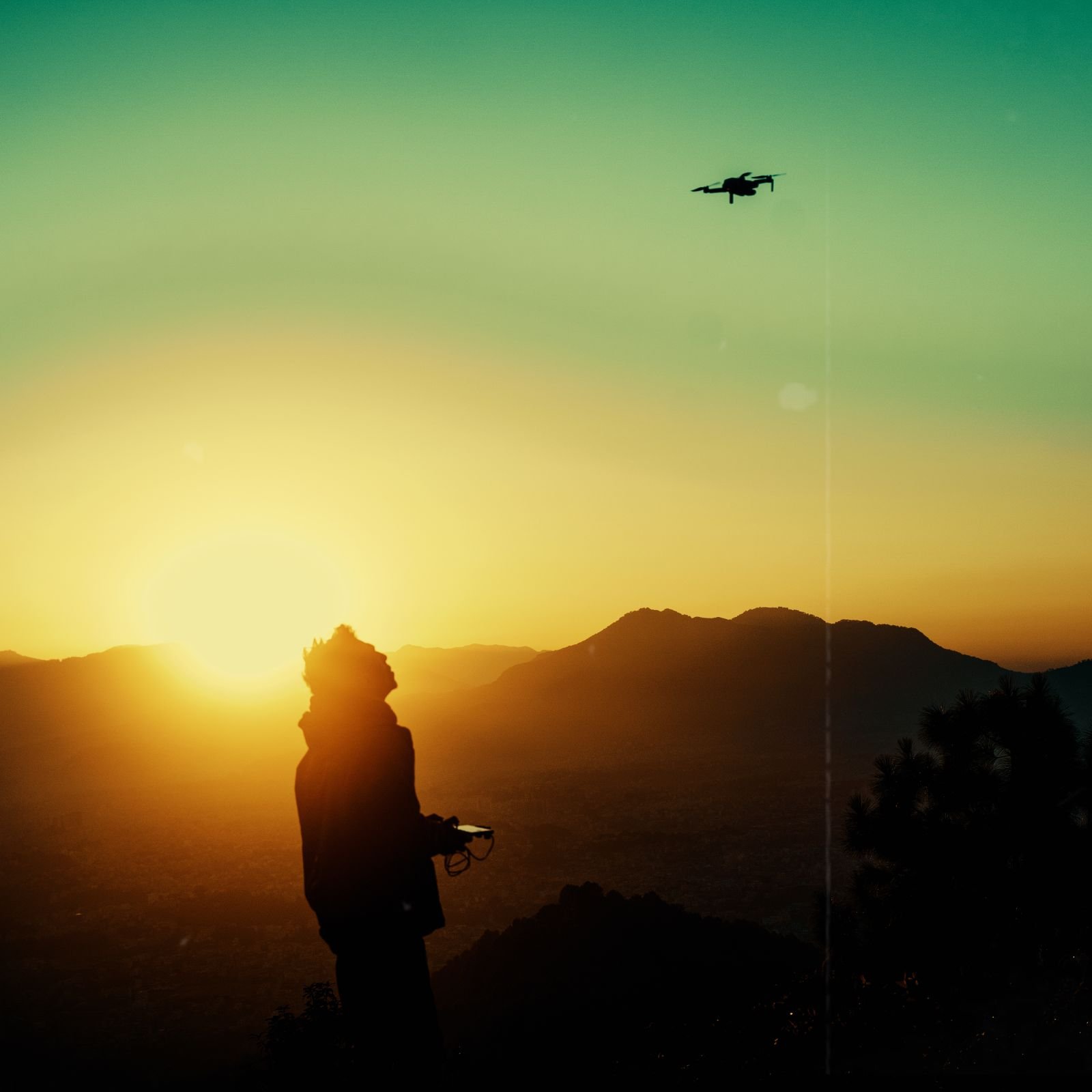
Drones and national parks are a combination that requires particular care, because a drone touches several sensitive areas at once. Inside a park, a drone can disturb wildlife through noise and presence, it can intrude on zones that ground crews would never enter, and it raises airspace considerations that exist independently of the park itself. For these reasons, adding a drone to a park plan is not a small equipment decision; it is effectively adding another permission layer with its own considerations.
When a production tells us it wants aerial footage inside a park, we treat that as a distinct workstream from the moment it comes up. The drone element has to be described clearly: the aircraft, the operator, where and how you intend to fly, and how you will avoid disturbing wildlife and sensitive habitat. A park is one of the environments where casual or opportunistic drone flying is least appropriate, and where a well-documented, carefully bounded plan matters most.
Because the drone layer can affect whether and how the park layer proceeds, we encourage productions to decide early whether aerial footage is genuinely essential. Sometimes it is, and the shot cannot be achieved another way. Often, though, the ambition behind an aerial shot can be met with ground-based coverage, longer lenses, or footage sourced separately, without taking on the added complexity a drone introduces inside a protected area. Weighing this honestly at the planning stage can simplify your whole park request.
The considerations that apply to drones in Nepal generally, covering the aircraft, the operator, registration, flight permission, airspace and protected areas, all still apply and interact with the park layer. We do not promise drone permission, and we are careful never to imply that a park location makes aerial access easier; if anything, it makes it more constrained. The specifics for your park and your aircraft are confirmed against current official sources during your review.
Our role is to make sure the drone element is planned deliberately rather than assumed, to help you present it clearly if it is essential, and to help you identify alternatives if it is not. A production that treats drone use inside a park as just another line on the equipment list is likely to run into difficulty; one that treats it as a considered, separately prepared element is in a far better position.
Multiple parks and multi-location park schedules
Some productions want to film across more than one national park, or across a park plus other protected or sensitive locations, in a single trip. This is entirely reasonable creatively, but it multiplies the permission work in ways that are easy to underestimate. Each park is its own location-specific permission with its own document set, its own possible authority, its own charges and its own lead time. A schedule that treats several parks as a single block of access is built on a misunderstanding.
The first thing we do with a multi-park plan is separate it into its component requests. Rather than one park effort, you have several parallel efforts, each of which needs its own inputs and its own timeline. This is not doubling of work in a linear sense, because some of your core documents carry across, but the location-specific parts, the zone maps, activity descriptions, footprint details and safeguards, are distinct for each park and cannot be recycled wholesale.
Sequencing then becomes a real planning exercise. Travelling between parks takes time, conditions differ, and the order in which you shoot may affect how your requests are best prepared. We help you think about the schedule as a chain of dependencies, where the availability of one park, the lead time of another, and the travel between them all have to fit together. Building this chain with buffer, rather than assuming each link will hold exactly on time, is essential.
There is also a coherence benefit to preparing multi-park requests together. When the same production is described consistently across several location-specific applications, each request reads as part of a single, well-organised effort. Inconsistencies between how a production describes itself to different parks are a needless source of clarification requests. Preparing the whole picture in a coordinated way keeps your story consistent everywhere it appears.
We do not promise that filming across multiple parks can be compressed into any particular timeframe, and we are honest that an ambitious multi-park plan may need to be trimmed or resequenced to be realistic. The specifics for each park are confirmed against current official sources. What we bring is the discipline to treat each location properly, the coordination to keep the overall effort coherent, and the candour to tell you when a multi-park ambition is running ahead of what the schedule can support.
Documents a park-filming production typically prepares
While the exact requirements for a given park are confirmed during your review, foreign productions filming in national parks generally prepare from a recognisable set of document categories. Assembling these early, in clean and consistent form, is the most reliable way to keep both your main permit and your park permission moving. Missing or inconsistent documents are the most common cause of avoidable delay, and they are entirely within your control to prevent.
The first category is producer and company documentation. This establishes who the production is, that it is a legitimate entity, and who is responsible for it. The second is project description material, which explains what you are making, its purpose, and its intended nature. For a park, this project description needs to be consistent with, and translatable into, the location-specific activity you are requesting.
The third category is crew documentation, identifying the people who will be present and their roles. The fourth is equipment documentation, listing what you are bringing, which for a park is especially important because your equipment footprint directly affects how your request is assessed. The fifth is the location-specific material itself: the zones you want, the dates, the activities, the routes and the safeguards you will observe. This is the material that is unique to the park layer and cannot be borrowed from a general permit package.
Beyond these, depending on your plan, you may need material relating to drones, to any overlapping heritage or buffer-zone features, to vehicles, or to specific activities that require their own description. Part of our review is identifying, from your shot plan, which of these additional categories apply so that nothing is assembled late. We would far rather flag a needed document weeks out than have it surface as a gap when time is short.
We help you assemble, review and organise these categories so they read as one coherent package, and we flag translation, signature and format issues before they become problems. We do not invent the specific list for your park; that is confirmed against current official sources during your review, because it is set by the relevant authorities and varies by location. What we guarantee is a disciplined, honest preparation process, not a particular decision from any authority. The table below sets out these categories in a planning-friendly form.
Wildlife-sensitive scheduling and the shooting day
Once a park permission is in view, the shape of your shooting day inside the park deserves specific thought, because a park day rarely runs like a normal location day. The environment sets the terms. Wildlife activity, light, weather and access all vary, and a plan that ignores these variables in favour of a rigid schedule tends to fight the location rather than work with it. Planning the day around the park's rhythms, rather than imposing a studio-style schedule on it, produces both better footage and fewer problems.
The first consideration is time of day. Wildlife and light are both strongly time-dependent, and the windows that are best creatively are often also the most sensitive environmentally. We help you think through how your intended shots map onto the parts of the day when they are both achievable and appropriate, so that your ambitions and the park's sensitivities are aligned rather than in tension.
The second consideration is movement and footprint discipline through the day. A park day usually involves keeping to defined routes, limiting how far and how often you move, and staying out of zones that are not part of your permission. This affects how you plan coverage: you cannot assume the freedom to reposition freely that you might have on an open location. Designing your day around a smaller number of well-chosen positions, rather than constant movement, fits the environment better.
The third consideration is pace and patience. Wildlife does not perform to a call sheet, and weather can change access at short notice. A park schedule that is packed to the minute leaves no room for the reality that the best moments often have to be waited for and that conditions can shift. Building realistic buffers into the day, and being honest with your team about the difference between a controllable location and a living one, prevents the frustration that comes from expecting a park to behave like a set.
We do not run your shoot for you, and we do not promise any particular result on any particular day. What we can do during preparation is help you build a day plan that respects the park, fits within your permission, and is realistic about the environment. Any conditions attached to your permission, including anything about timing, routes or accompaniment, are confirmed for your specific park and take precedence over any general planning we discuss. A production that plans its park days with humility about the environment tends to come away with both the footage it wanted and a clean record of respectful behaviour.
Illustrative scenario: a small documentary crew in a park
To make the layers concrete, consider an illustrative scenario. This is a composite example for explanation only, not a description of a specific client or a promise of any outcome. A small foreign documentary crew wants to film inside a national park over a few days: some presenter pieces near accessible areas, some observational wildlife footage at a respectful distance, and, ideally, a small amount of aerial footage. They come to us with a rough shot list and a set of dates already pencilled into their wider trip.
Our first step is to separate the layers. The main film permit is one workstream. The park permission is another, location-specific one. The aerial footage is a third, because a drone inside a park is a distinct consideration. Simply naming these three streams changes how the crew sees their own plan, because they had assumed a single approval would cover all of it.
We then translate the shot list into location terms. The presenter pieces sit in accessible zones and represent a small footprint. The wildlife footage needs careful thought about distance, timing and disturbance, and we flag that the intended close observational shots may need to be reconceived at a more respectful range. The aerial footage prompts an honest conversation: is it essential, given the added complexity of drone use inside a park, or could the same ambition be met from the ground? In this scenario the crew decides the aerial shots are a nice-to-have rather than a necessity, which simplifies their whole request.
With the drone set aside, the remaining park request becomes a clean, low-impact proposal: a small crew, light equipment, defined zones, respectful distances and clear safeguards. We help assemble the location-specific package, check it for consistency against the main permit materials, and flag the categories of charge and the possibility of accompaniment so the crew can budget and schedule realistically. The specifics are confirmed against current official sources.
The point of the scenario is not that this crew was guaranteed access; no one can promise that. The point is how much smoother the preparation becomes once the layers are separated, the shot list is translated honestly into what a park can accommodate, and the ambitions that add disproportionate complexity are weighed rather than assumed. A production that arrives with this mindset is far easier to prepare, and far better positioned, than one that treats a park like any other backdrop.
Scope changes once a park plan is underway
Productions evolve, and a plan that was accurate when you first prepared it may change as your shoot approaches or even during it. Inside a national park, changes to scope are handled with particular care, because the permission you hold was assessed on the basis of a specific footprint and set of activities. Expanding beyond that basis is not a matter of quietly doing more; it generally means going back through a process to have the change considered.
The kinds of change that matter most are those that increase your impact. Adding crew, bringing heavier equipment, extending into zones that were not part of your original request, adding activities that were not described, or introducing a drone where none was planned all change the footprint the authority evaluated. Because a park permission is tied to that footprint, a material change usually needs to be raised and considered rather than absorbed silently. Attempting to expand your activity beyond your permission is exactly the kind of thing we advise against.
Smaller changes may be simpler, but the honest answer is that whether a given change is minor or material is not always for the production to decide alone. Part of our role, if your plan shifts, is helping you assess which changes are likely to be absorbable and which are likely to require a formal scope change, and then helping you prepare the latter cleanly. Raising a change early, with clear documentation, is always better than presenting a park with a surprise on the day.
The scheduling implication is the one to internalise now, while you are planning. A scope change takes time, and a park is not a location where you can assume rapid turnaround. If there is a real chance your ambitions will grow, it is far better to describe the fuller plan from the beginning and have it assessed once, than to secure a narrow permission and try to widen it under time pressure later. Building your initial request around your realistic maximum, rather than a hopeful minimum, is usually the wiser choice.
We do not promise that any scope change will be accepted, or accepted within any particular timeframe, and the specifics are confirmed against current official sources for your park. What we offer is a disciplined way of handling change: assessing it honestly, documenting it clearly, raising it through the right channel, and being candid with you about the schedule risk it carries. A production that manages scope changes this way protects both its shoot and its standing with the park.
How our support works for park filming
It is worth being explicit about what we are and how we work, because national park filming is an area where the distinction between a support service and an authority matters. Film Permits Nepal is an independent, private production-support service in Kathmandu. We do not issue permits, we do not grant park access, and we do not control any decision by any authority. We help foreign productions prepare, so that when your requests reach the relevant bodies they are complete, accurate, consistent and easy to assess.
Our work on a park project typically begins with a structured review of your plan. You tell us the park, your intended dates, your shot intentions, your crew and your equipment, and we map the layers that apply: the main film permit, the location-specific park permission, and any overlapping considerations such as drones, heritage features or buffer zones. The output of that review is a clear picture of what your project actually involves, which is often more layered than productions expect.
From there we help you assemble and review the documents each layer needs, in the categories described above. We check for consistency across your materials, flag translation, signature and format issues, and identify gaps while there is still time to fill them. We help you translate creative ambitions into the concrete location terms a park request needs, and we help you weigh the elements, such as drones or aggressive activity, that add disproportionate complexity. Throughout, we coordinate the practical steps so your paperwork moves rather than stalls.
What we are careful never to do is overstate our role. We do not promise approval, timing, access, drone permission or any particular set of conditions. We do not assert specific fees or a single named authority as verified fact when those things need to be confirmed fresh. We do not present ourselves as a government office or imply influence over decisions. When something must be checked against current official sources, we say so plainly and we do the checking rather than guessing.
We also take confidentiality and document handling seriously, because you are entrusting us with materials about your production. Your information is used to prepare your requests and is handled with care. The relationship works best when it is honest in both directions: you give us an accurate picture of your real plan, and we give you an accurate picture of what a park location involves, including the parts that are constrained or uncertain. That honesty, on both sides, is what makes a park shoot achievable and calm rather than fraught.
| Document category | Who prepares it | Purpose | Notes on format |
|---|---|---|---|
| Producer and company records | Production company | Establishes the production as a legitimate entity and identifies who is responsible | Consistent details across all layers; translation may be needed |
| Project description | Production, with our support | Explains what you are making, its purpose and nature, in terms consistent with the park request | Must align with the location-specific activity described |
| Crew list | Production | Identifies who will be present in the park and their roles | Kept accurate and up to date; changes may affect footprint |
| Equipment list | Production, with our review | Describes the equipment footprint, which directly affects how a park request is assessed | Detailed and honest; heavier kit increases scrutiny |
| Location-specific park material | Production, with our support | States zones, dates, activities, routes and safeguards for the park | Unique to the park layer; cannot be reused from a general permit |
| Safeguard and impact notes | Production, with our support | Shows how disturbance, waste and boundaries will be managed | Strengthens the request; demonstrates conservation awareness |
| Drone material (if applicable) | Production, with our support | Describes aircraft, operator and flight intentions for any aerial work | Treated as a separate layer; confirmed against current sources |
| Overlap material (heritage, buffer, vehicles) | Production, with our support | Addresses any additional layer your plan touches | Identified from your shot plan during review |
Document categories a foreign production typically prepares for national park filming. Exact requirements are confirmed against current official sources for your specific park during your review.
What this includes
- Structured review of your park plan and mapping of the permission layers that apply
- Help translating creative shot intentions into concrete location terms a park request needs
- Assembly and review of the document categories a foreign production typically prepares
- Consistency checks across your main permit and park materials, plus translation, signature and format flags
- Identification of overlapping layers such as drones, heritage features, buffer zones or vehicles
- Guidance on likely wildlife and environmental safeguards and how to reflect them in your request
- Help structuring a realistic budget with the categories of charge that may apply
- Coordination of practical preparation steps and honest flagging of schedule dependencies
- Confirmation of specific requirements against current official sources for your particular park
- Careful, confidential handling of the production materials you share with us
What this does not include
- Issuing permits or granting national park access; we are a private support service, not an authority
- Any guarantee of approval, timing, level of access, drone permission or specific conditions
- Assertion of specific park fees or a single named issuing authority as verified fact without confirmation
- Collecting official park or permit charges on your behalf as a substitute for official processes
- Arranging or guaranteeing a particular guide, liaison or escort outcome
- Advising on ways to exceed or work around a park's restrictions or the conditions of a permission
- Personalised legal advice; we prepare documentation and coordinate, we do not act as your legal counsel
- Running your shoot, directing your crew, or supervising activity on the ground inside the park
- Guaranteeing customs clearance for equipment or any outcome controlled by other authorities
- Any representation that we are a government office or that we influence official decisions
Frequently asked questions
In most cases, no. A national park usually requires a separate, location-specific permission that sits alongside your main film permit rather than being included in it. The main permit recognises your production as a legitimate filming activity in the country, while the park permission governs whether and how you may film inside that specific protected area. Because they are separate, they move on separate timelines and need their own document sets. The exact relationship for your park is confirmed against current official sources during your review.
National parks fall under protected-area management, and the body that administers a given park is the starting point for location-specific permission. We do not name a single authority as the fixed issuer on this page, because arrangements can differ by park and can change, and stating one as verified fact would be misleading. During your review, the applicable body for your specific park and activity is confirmed against current official sources. What is stable enough to plan around is that any such body weighs your request against its conservation responsibilities, so a precise, low-impact request is always in your interest.
There are usually charges associated with entry and with filming activity, but we do not quote fixed amounts on this page because these figures vary by park, activity, crew size and equipment, and must be confirmed against current official sources. Rather than a single number, it is safer to budget for several components: entry-related costs, filming-related charges, elements that scale with your footprint, and possible extras such as drones or vehicles. We help you identify which categories are likely to apply to your plan and flag the figures that need verifying. Keeping your park charges separate from your main permit charges gives you a clearer overall budget.
Drone use inside a park is possible in principle but heavily constrained, and it is treated as a separate permission layer rather than an incidental piece of equipment. A drone can disturb wildlife, intrude on sensitive zones and raise airspace considerations all at once, so a casual or opportunistic approach is least appropriate here. If aerial footage is essential, we help you prepare a clear, carefully bounded request; if it is a nice-to-have, we help you weigh whether ground-based alternatives can meet the same ambition. We never promise drone permission, and the specifics for your park and aircraft are confirmed against current official sources.
Many parks expect filming to be accompanied by a guide, liaison or escort, and larger or more equipment-heavy shoots are more likely to involve this than small, brief presences. Whether it applies to your plan, and in what form, depends on the park and is confirmed against current sources during your review. It is wise to assume the possibility and build it into your schedule and logistics, since it can affect your dates, your ground movements and how your day runs. An accompanying person is often a genuine asset, offering a direct line to how the park works in practice.
As early as you possibly can. A park location introduces several dependencies that compound: the main film permit has its own lead time, the park permission has a separate one, and any overlapping layer such as a drone adds more. When these run in sequence rather than in parallel, a comfortable schedule can become tight. We front-load the information we need and treat the layers as parallel workstreams, but even so, starting early and building buffer into your schedule is the most effective thing you can do to protect your dates. We never promise a specific processing time, because that depends on the relevant authorities.
Activities that disturb wildlife or habitat draw the most scrutiny, including close approach to animals, baiting or calling, artificial lighting, loud sound, construction or set dressing, off-route vehicles, large crews and extended occupation of an area. Some activities may not be permitted at all in certain parks or zones, regardless of how carefully they are proposed. We describe these as tendencies rather than fixed rules, because what is restricted is set by the relevant authority and confirmed for your specific location. Part of our review is testing your shot intentions against likely restrictions so your creative planning stays grounded in what is realistic.
No. Park permission is location-specific and does not travel. Each park is its own request with its own document set, possible authority, charges and lead time, so a multi-park plan means several parallel efforts rather than one block of access. Some core documents carry across, but the location-specific parts, such as zone maps, activity descriptions and safeguards, are distinct for each park. We help you separate a multi-park plan into its components, sequence them with buffer, and keep your production described consistently across every request to avoid needless clarification.
Foreign productions generally prepare from a recognisable set of categories: producer and company records, a project description, a crew list, an equipment list, and location-specific park material covering zones, dates, activities, routes and safeguards. Depending on your plan, you may also need drone material or documentation for overlapping layers such as heritage features or vehicles. We help you assemble and review these, check them for consistency, and flag translation, signature and format issues. The exact list for your park is confirmed against current official sources, because it is set by the relevant authorities and varies by location.
Changes that increase your impact, such as adding crew, bringing heavier equipment, extending into new zones, adding activities or introducing a drone, generally need to be raised and considered rather than absorbed quietly, because your permission was assessed on a specific footprint. Whether a given change is minor or material is not always for the production to decide alone. We help you assess which changes are likely absorbable and which require a formal scope change, and we prepare the latter cleanly. Because a scope change takes time, it is usually wiser to describe your fuller realistic plan from the start than to widen a narrow permission under pressure later.
No, and we would be cautious of anyone who claimed otherwise. We are an independent private support service, not an authority, and we do not control any decision about park access, timing or conditions. What we can genuinely offer is help preparing a request that is complete, accurate, consistent and easy to assess, which is the part of the process a production can actually control. The decision itself, and any conditions attached to it, rest entirely with the relevant body. Our honesty about this boundary is part of what makes our support trustworthy.
Safeguards shape your request from the start rather than being added afterwards. A park assesses filming through a conservation lens, so anything that could stress or displace animals, disturb habitat, or leave a trace is viewed with caution. In practice this pushes productions toward smaller crews, quieter and lighter equipment, disciplined movement along defined routes, and careful timing. A request that clearly describes how you will manage noise, waste and boundaries presents a much stronger case than one that treats the park as a neutral backdrop. We help you anticipate the likely areas of concern and shape your plan accordingly, then confirm the specific conditions against current sources.
Yes. A national park is a protected, living environment where the impact of your presence on wildlife and habitat is the central concern, which makes it distinct from heritage sites, public spaces or private property, each of which has its own separate considerations. The park layer is location-specific, tied to zones and activities, and weighted heavily toward conservation. If your plan touches more than one type of location, each is prepared as its own layer with its own requirements. We map all the layers your plan involves during your review so nothing is discovered late.
We help foreign productions prepare: we map the permission layers, translate shot intentions into concrete location terms, assemble and review the necessary documents, check consistency, flag gaps and issues, and coordinate the practical steps, then confirm specifics against current official sources. We do not issue permits, grant access, guarantee any outcome or timing, assert unverified fees or authorities, collect official charges as a substitute for official processes, or present ourselves as a government office. We also handle your production materials confidentially and with care. The relationship works best when you give us an accurate picture of your real plan and we give you an honest picture of what a park location involves.